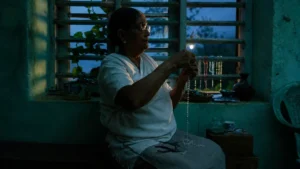
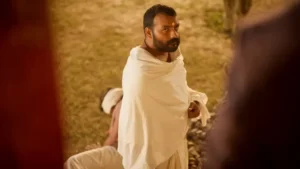
Kidney (2026): Simran Tandon and Rudrashish Majumdar Carry a Feud That Never Quite Draws Blood

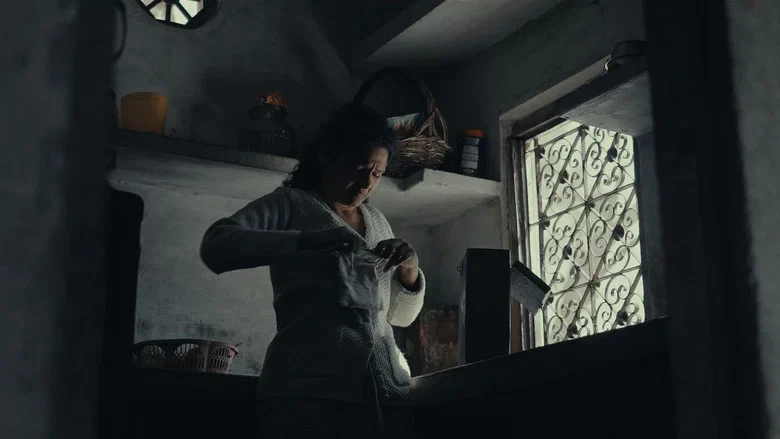
A dead man’s land deed, two families sharpening old knives, and a pair of lovers caught in the middle: the Sansanwal brothers have built a village comedy of inheritance where every smile hides a claim.
When a Property Dispute Is The Only Engine Running
The premise is old as soil: boy and girl from warring households, love blooming in the shadow of an old grudge. What Aakarsh and Agrim Sansanwal add is a fresh trigger, an inheritance quarrel that reactivates dormant hostility and drags the romance into a fight it did not choose.
That structural choice is smart. It refuses to make the lovers’ own weakness the obstacle, placing the pressure squarely on greed, betrayal, and the dead hand of family history. The village setting does the rest, sealing everyone into a space where private business becomes public property.
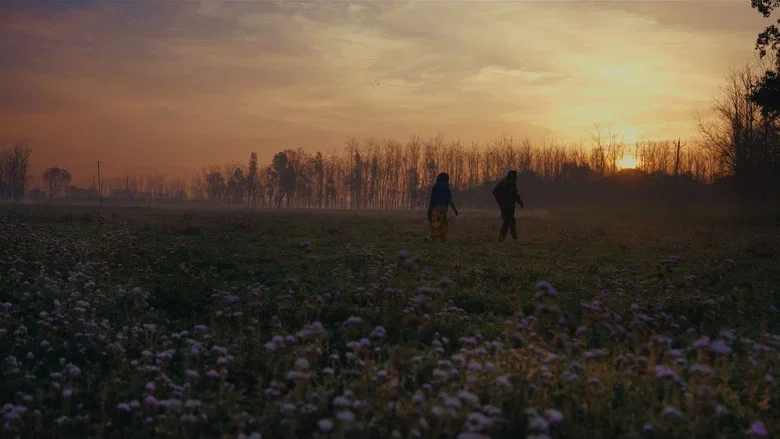
The Black Comedy That Keeps Forgetting To Bite
Here is where the film’s tonal ambition begins to wobble. A rural black comedy needs a steady hand on the dial between affection and menace, and the Sansanwals frequently let the menace drift into mere irritation rather than genuine threat.
The inheritance dispute should be a knife. Too often it plays like a loud argument across a courtyard, present, disruptive, but rarely sharp enough to draw blood. The satire lands in fits rather than a sustained rhythm, and the middle stretch starts to feel like a negotiation the audience was not invited to.
Where the film does hold its nerve is in the small absurdities of property obsession: elders counting what is owed, relatives arriving with grievances folded neatly under their arms.
These beats carry a quiet sting that the broader comedy frequently misses. The screenplay resists the kinetic sensationalism that overtook Saheb's stolen Redmi, opting instead for a deliberate village-bound dread.
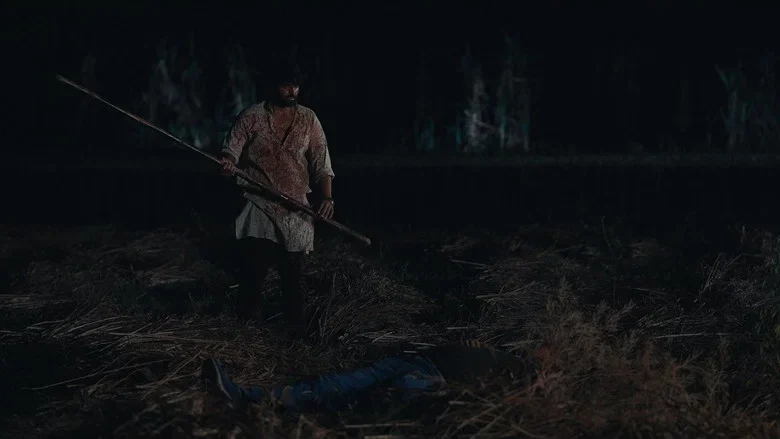
Simran Tandon Holds The Centre While The Men Argue
Simran Tandon is the film’s most disciplined presence. Watch her in the quieter exchanges, the way she keeps her hands still when the men around her raise their voices, the small delay before she answers a question loaded with family loyalty. She plays the lover as someone already calculating the cost of loving.
Rudrashish Majumdar has the harder job: he must carry romantic commitment while his character is surrounded by inherited hostility.
His best moments come in the pauses, a jaw tightening before a response, a glance toward a doorway where a relative is about to enter. It is a performance of withheld reactions rather than declarations, and it suits the film’s restraint.
The restrained physical exhaustion both leads bring to the final stretch recalls the psychological weight of the ensemble turn in Reporting Live. Neither performer reaches for theatrical anguish; both understand that the damage is done in silence, in the space between what is said and what is swallowed.
The Supporting Cast As A Chorus Of Grievance
Around the leads, the village functions as a chorus. The older relatives arrive with their claims and their grudges, and the film uses them well as texture, the uncle who will not sit down, the neighbour who repeats a rumour as fact.
Individually they are barely sketched; collectively they create the pressure that makes the lovers’ privacy feel like contraband.
What the supporting ensemble lacks is a single figure who can crystallise the threat. The opposition is distributed across the feuding families rather than concentrated in one antagonist, and that diffusion costs the film a focal point. Greed becomes an atmosphere rather than a face.
Camera, Silence, And The Village That Watches
The visual grammar keeps the lovers small in the frame, often boxed by doorways, walls, and the shoulders of relatives who have wandered into the shot. That compositional crowding does more dramatic work than any dialogue about family honour. The village is not a backdrop; it is a room with no exit.
Shray Saxena’s score is used sparingly, which is the right instinct in a film that depends on awkward silences. The problem is that the silences are not always filled with tension, sometimes they simply sit there, waiting for the next argument to start.
Just as he demonstrated a tighter spatial discipline in One Chicago Breaks Tuesday Tradition, the filmmaker strips away decorative camera moves here to prioritise raw psychological friction, but the friction needs more heat.
Enfant Terrible And The Economics Of A Festival Darling
Enfant Terrible Productions, the banner founded by the Sansanwal brothers, has staked real capital on a village comedy with no star anchor and no franchise scaffolding. Platoon One Films joining as co-producer before the Tallinn screening suggests the film’s festival profile was always part of the business plan, not an afterthought.
That is a gamble worth noting. The film arrives in a market where rural Hindi dramas without a familiar face struggle to hold screens past the first weekend, and where the remake pipeline still dominates the release calendar.
A Critics’ Picks slot at Tallinn buys prestige, not footfalls. The theatrical lifecycle for a film like this depends almost entirely on word-of-mouth surviving the first three days.
This patient character study signals a welcome tonal maturity across contemporary hindi dramas, proving that tension can be built without manufactured plot theatrics, even when the execution does not fully arrive.
The Ending That Refuses To Settle The Bill
The resolution does not hand the lovers a clean victory, and that is the film’s most honest instinct. The inheritance dispute is not a problem that love can solve; it is a problem that love has to survive.
The final stretch leaves the audience with the uncomfortable recognition that some feuds outlive the people who started them.
What lingers is not the comedy but the arithmetic, the sense that everyone in this village is counting something, and nobody is counting the cost to the two people who simply wanted each other.
Kidney is a film with a sharp premise and a soft grip, carried by two performers who understand that the quietest person in the room is usually the one paying for it.

Ankit Jaiswal is the Chief Author, covering Indian cinema and OTT releases with honest, no-filler criticism. An SEO strategist by background, he brings a research-driven approach to film writing, cutting through hype to tell you exactly what's worth your time.
Related Movies & Releases