Below Ending Explained: The Iceberg Nest Twist & Why Calvin Never Truly Wins

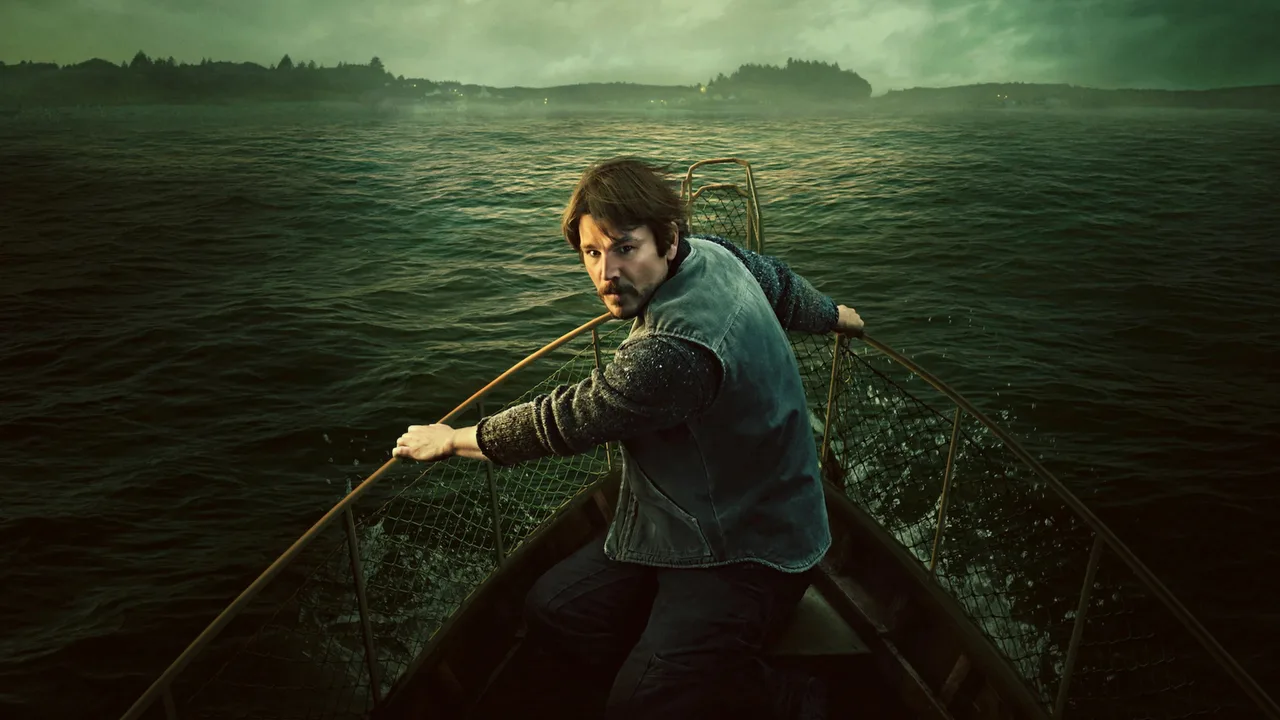
The net pulls taut, the engine screams against the drag, and Calvin’s boat hauls a chunk of ice out of Snook’s Arm while a creature the size of a church follows it into deep water. That’s the last real gamble of Below, not a harpoon, not a warhead, just a fisherman towing a nest away from a harbor full of people who’ve already packed their bags. Everything before the cut to black is aftermath: a dead mother, a field of icebergs, and a father and son staring at a horizon that just got a lot more crowded.
An Evacuation Order That Was Always a Land Grab
The third act doesn’t detonate so much as tighten. Residents load choppers supplied by the Crocker family, carrying what fits in their arms while their houses stay behind on the shoreline. The evacuation is staged like mercy and functions like foreclosure.
Jim Crocker backs the military’s push to erase Mudder outright, and the air strike waiting on a radio order is the real pressure valve of the finale. Fonda argues biology into a chain of command that has already decided the creature is ordinance disposal. The procedural friction between the two (scientist versus boardroom, evidence versus expedience) echoes the institutional rot that drags down the prosecutor in Prahaar, where the system’s paperwork does more damage than any single villain.
Calvin sits between them with a boat and no authority. The clock isn’t a countdown to the monster reaching shore. It’s a countdown to a pilot’s thumb coming down on a trigger.
The Towing Maneuver: A Fisherman’s Gamble Against a Fighter Jet
When Calvin and Fonda confirm the iceberg holds an egg sac, the geography of the climax flips. Mudder isn’t circling the harbor to hunt. She’s circling her nest. Every attack the town survived was a mother defending a nursery she couldn’t move.
So Calvin moves it for her. He rigs the net, throttles up, and drags the ice toward colder, deeper water with the military holding its fire overhead and the whole town watching from the evac line. The sequence works because it’s so unglamorous, rope, diesel, and a man steering a small vessel against something that could capsize him with a flick.
Mudder follows the ice. That’s the entire proof of concept. The creature’s violence was never appetite; it was attachment, and the film lets a tow line do the arguing. It’s a quieter brand of tension than the folk-horror dread running through Garividi Lakshmi, but the same rule applies: the monster is only as scary as the superstition built around it, and here the superstition breaks the moment the science holds.
The Egg Sac Revelation That Rewrites Every Attack
Rewatch the earlier episodes and the pattern is almost embarrassingly plain. Mudder never wanders far from the ice. She returns to it after every confrontation, drawn back like a compass needle. The town read that as territorial aggression toward them. It was always about the nest.
The reveal also flips the human conspiracy inside out. The Crocker evacuation wasn’t a rescue plan with an inconvenient monster problem. The monster was the pretext, and the relocation was the point, clear the residents, open the resources, let the military do the messy part and call it public safety.
One image does the heavy lifting: the iceberg itself, an object that looks like a single hazard and contains an entire hidden reproductive cycle. What the community couldn’t see under the waterline was the whole story.
Who Walked Away From Snook’s Arm and Who Paid the Toll
Calvin survives, but the film refuses to hand him a victory lap. He stops the strike and saves the harbor from being flattened, then watches Mudder complete her reproductive cycle and die anyway. Cephalopods breed once. The mother’s clock was always running out, and his clever tow bought her a quiet death instead of a violent one.
Fonda stays to study what’s left, her science vindicated and her warnings ignored until the last possible minute. Wade ends up on the water beside his father in the closing scene, which is the film’s way of passing the unresolved question to the next generation without a single line of dialogue about legacy.
Crocker’s operation gets disrupted rather than dismantled. No handcuffs, no perp walk, just a corporate machine losing its grip on a town it had already priced. The residents survive the bombs that never fell and still lose their homes, their harbor economy, and their way of life. That’s the toll the show refuses to soften.
Ice, Silence, and the Horror of a Warming Ocean
The final field of icebergs is the shot that matters. Calvin and Wade motor into open water and find not one anomaly but many, a scattered archipelago of frozen nests drifting through a sea that shouldn’t be holding them.
That image drags the whole season out of creature-feature territory and into climate dread. The icebergs are the visible edge of something enormous and unseen, and the show’s visual language has been building to it, all that cold blue light, all that black water under the hull, all those wide frames where the town looks tiny against the ice.
Sound does the rest. The score drops away in the final minutes and leaves engine noise and wind, the plain acoustic reality of two people realizing the problem is bigger than their postcode. It’s the kind of restrained final beat that’s becoming rarer across recent theatrical releases, where endings increasingly shout instead of stare.
The Hatch Debate: Did the Eggs Survive or Was It All for Nothing
The one loose thread fans keep pulling is the fate of the offspring. One reading says the water stayed too warm and the eggs failed, Calvin’s rescue saved a mother only to watch her line end, making the whole tow a gesture rather than a solution.
The other reading points to that final iceberg field and argues the opposite. If Mudder was one nest among many, the species isn’t finished; it’s expanding into waters it shouldn’t be able to survive in, and Snook’s Arm was simply the first place the phenomenon surfaced.
Both readings are supported by what’s on screen, and the ambiguity feels deliberate. A clean answer would let the audience exhale. The show wants them holding their breath.
Saltwater, Silence, and a Problem Without a Final Page
Below ends without a post-credits stinger because it doesn’t need one. The iceberg field is the sequel hook, the thesis, and the warning all at once, delivered in a single wide shot with no musical cue to tell you how to feel.
Calvin’s moral position is the most interesting thing the finale leaves behind. He chose the harder, riskier path over the military’s clean solution, and the reward was a reprieve he can’t measure and a community he can’t restore. The man who saved the harbor still watches his neighbors drive away from it.
The final image isn’t triumph. It’s a father and son on a boat, engines idling, looking at ice that shouldn’t be there. Nobody says anything. The water does the talking.

Ankit Jaiswal is the Chief Author, covering Indian cinema and OTT releases with honest, no-filler criticism. An SEO strategist by background, he brings a research-driven approach to film writing, cutting through hype to tell you exactly what's worth your time.
Related Movies & Releases