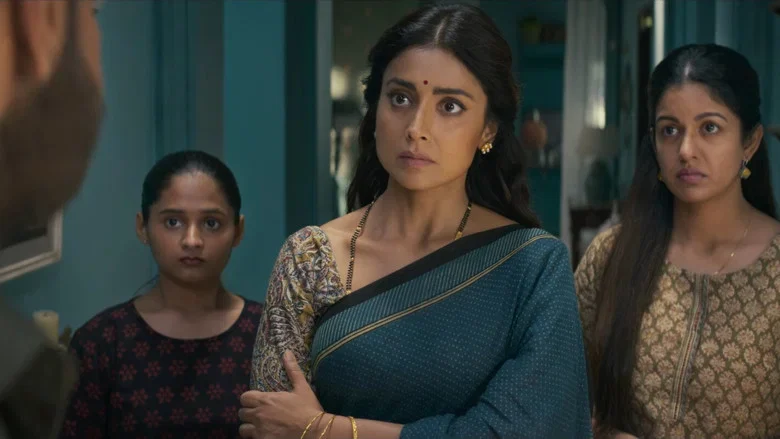
Drishyam: The Conclusion (2026): Ajay Devgn’s Calculated Calm Can’t Fully Crack A Familiar Case


The body is buried. The alibi is rehearsed. The family has learned to lie in perfect unison. And yet, three films deep into the Hindi Drishyam machine, the most revealing thing about Drishyam: The Conclusion is how little it wants to surprise you anymore. It wants to reassure you. It wants you to sit down, remember what happened last time, and wait for the inevitable tightening of the noose. Abhishek Pathak’s film is a sequel that behaves like a reunion, comfortable, competent, and occasionally coasting on the goodwill of a decade-old secret.
The Noose Tightens, But The Knot Is Familiar
The premise is structurally sound. New evidence reopens the Sameer Deshmukh disappearance, dragging Vijay Salgaonkar and his family back into the interrogation room. Pathak stages this reopening with genuine menace, the early sequences trade on the franchise’s core pleasure: watching a man who has already won a war prepare to fight it again.
But here’s the problem. Drishyam worked because the audience was complicit in the lie before they understood its cost. The first film’s genius was moral vertigo, you rooted for a killer because the system hunting him was corrupt. The sequel inherited that tension. This third instalment largely recycles it.
Where Sardar 2 tried to expand its franchise through sheer double-role spectacle, Drishyam: The Conclusion takes the opposite risk: it contracts, burrowing deeper into the same house, the same family, the same alibi. That’s a defensible artistic choice. It’s also a limiting one.
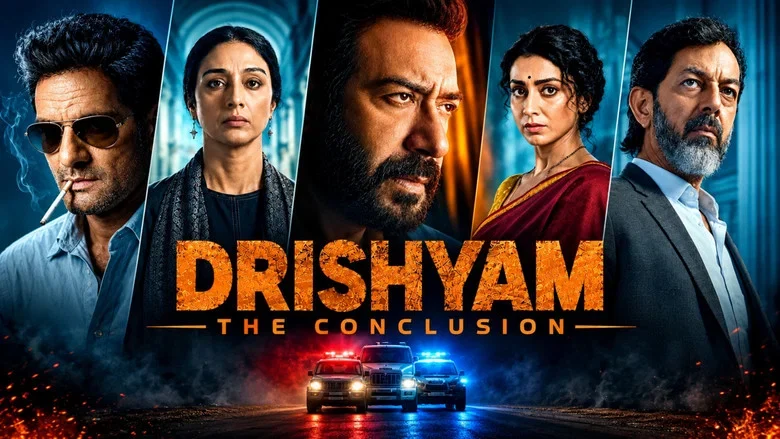
Jaideep Ahlawat Is The Best Thing Here
Jaideep Ahlawat enters as Rajveer Singh Tomar, the new crime branch officer, and immediately justifies his presence. Watch his first interrogation scene. He doesn’t shout. He doesn’t slam tables. He simply sits across from Vijay and lets silence do the work, a stillness that reads as absolute certainty. It’s a performance built on restraint, and it’s the sharpest dramatic tool the film has.
Ajay Devgn, meanwhile, is doing what he has done across this trilogy: a performance of controlled micro-reactions. A blink held a beat too long. A pause before answering a question he has already answered a hundred times in his head. It’s skilled work, and it anchors the film’s tension whenever the screenplay threatens to drift.
The supporting cast, however, has less to do. Tabu’s Meera Deshmukh returns with the weight of a grieving mother, but the script reduces her largely to reaction shots, a tightened jaw in a corridor, a stare held across a room. The family unit around Vijay functions as emotional ballast rather than active participants, and the film never quite figures out how to give them stakes beyond being potential liabilities.
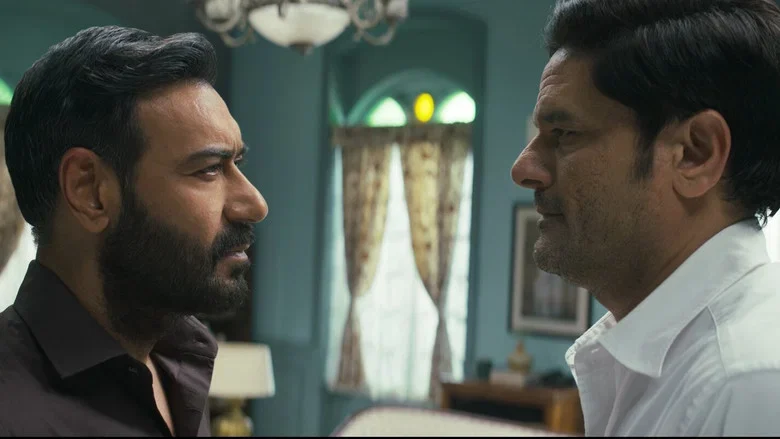
The Answers Don’t Always Convince
Here is where the film stumbles. The investigative reveals in the back half are staged with confidence, good lighting, tight framing, a score that swells on cue, but the logic underneath them is thin. A thriller lives and dies on the credibility of its deductions. When a reveal lands and you can feel the audience mentally checking the math, the spell breaks.
The climax has been widely praised, and it’s easy to see why. Pathak knows how to build to a moment. The final confrontation is well-blocked, and Devgn’s work in it carries real payoff. But payoff to what, exactly? The film’s emotional resolution depends on investments made in earlier films, not in this one. It’s a conclusion that works if you’ve been paying attention for a decade, and feels hollow if you haven’t.
For a different angle on how recent thrillers handle the weight of their own legacies, our take on The Transition offers a useful counterpoint.
The Verdict: A Competent Closing Argument, Not A Landmark One
Drishyam: The Conclusion is a well-made film that never quite becomes a necessary one. Pathak directs with assurance. Devgn and Ahlawat are excellent. The suspense mechanics are functional. But the film’s reliance on franchise familiarity, and its refusal to interrogate the moral questions that made the original so potent, keeps it from landing with the force it clearly wants to.
It’s the kind of sequel that satisfies in the moment and fades quickly after. For a franchise built on the idea that the truth always finds a way out, this one plays it safe.
Watch it if: You’ve followed the franchise and want closure, or you’re here for Ahlawat’s quietly commanding performance.
Skip it if: You haven’t seen the earlier films, or you’re hoping for a thriller that genuinely surprises you.
Rating: 3/5
Ankit Jaiswal is the Chief Author, covering Indian cinema and OTT releases with honest, no-filler criticism. An SEO strategist by background, he brings a research-driven approach to film writing, cutting through hype to tell you exactly what's worth your time.