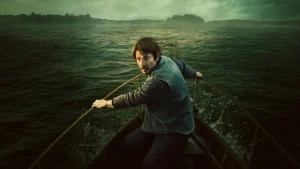
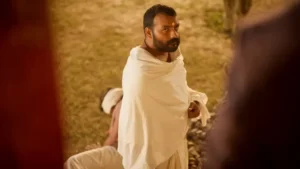
Animals Ending Explained: Mark’s Hero Lie and Who Really Shot the Kidnapper

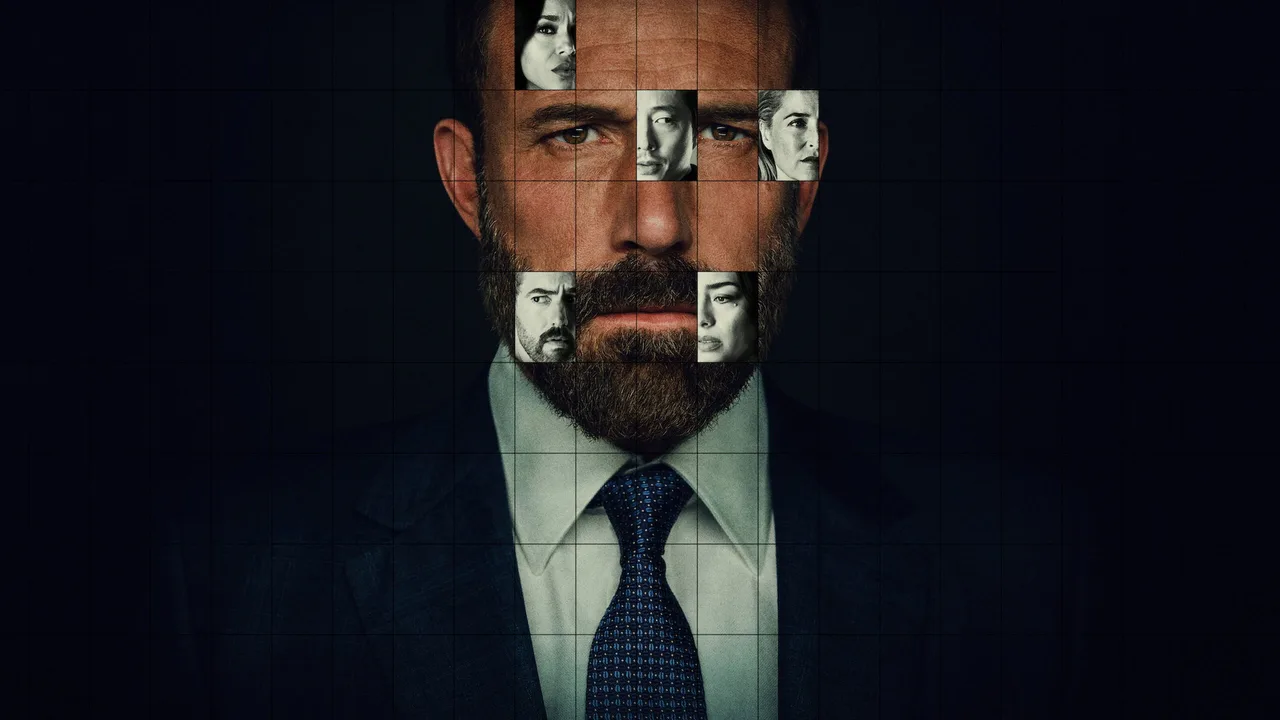
The last sound of Animals isn’t a gunshot or a concession speech. It’s the low, satisfied hum of a motorcade pulling away from a victory party, carrying a man whose entire political career now rests on a corpse he buried himself.
Mark Kimball gets everything he wanted. He just doesn’t get to be the man who earned it.
Seven Million Dollars and a Campaign Account Already Bleeding Out
The kidnapping doesn’t arrive as a clean crisis. It lands on a family already hollowed out by ambition, where the campaign war chest has eaten the money that could have bought Hector back.
Mark and Abigail are trapped in that specific American nightmare of appearing solvent while being functionally broke. The $7 million demand isn’t just a ransom figure. It’s a mirror held up to a household that spent its future on a mayoral run.
That financial rot is what drags the fixers into the frame. Dayle Burton doesn’t arrive as a savior. She arrives as a woman who keeps receipts, and the film plants that habit early with the casualness of someone setting a trap they intend to spring later.
The pressure compounds through Ramon and Cecilia, whose undocumented status makes them useful to everyone and safe for no one. The screenplay keeps tightening the vise until Mark’s only available moves are all illegal, all expensive, or all morally radioactive.
By the time he reaches the rural exchange site, the question has quietly shifted from can he save his son to what will he be willing to bury to keep the story clean.
The Cart on the Slope and the Firefight That Ate the Rescue
The exchange location is a director’s gift and the film knows it. Open terrain, masked figures holding the high ground, and a father standing in a bowl of scrub and dirt with nowhere to hide.
Then the kidnappers put Hector in a small cart and send him down a steep slope. It’s a brutal piece of staging, turning a child into a rolling object while the camera tracks the accelerating fall.
Mark breaks into the danger zone and catches him. For about four seconds, the movie lets you believe this is a rescue.
Dayle and Rand arrive with their own agenda, and Rand starts shooting before the money ever changes hands. Two kidnappers drop. The frame goes loud, chaotic, handheld, all the control of the previous scenes shredded.
Then the third abductor emerges from cover and kills both Rand and Dayle. The film doesn’t linger on heroism here. It lingers on the wet, unglamorous mechanics of people dying in dirt.
Mark is exposed, holding a child, with a shooter closing in and no clean way out. He doesn’t end it. He can’t.
Ramon Steps Out of the Brush and the Truth Dies With the Last Kidnapper
Ramon fires the shot that saves Mark and Hector, and in that instant the film’s entire moral architecture flips. The man with the least legal protection performs the most decisive act of violence.
That’s the twist, and it’s a cold one. The public will never see this version. The camera sees it, Ramon sees it, Mark sees it, and then the three of them agree to unsee it.
Dayle is still breathing long enough for Mark to take her phone. That device is the film’s real ticking clock, a pocket-sized archive of recordings and evidence documenting the kidnapping operation and the hidden participants behind it.
Mark doesn’t hand it to the police. He looks at what it can do to his campaign, to Ramon, to the whole fragile story, and he chooses the shovel over the badge.
He helps dispose of Dayle’s body and the dead abductors, and the film’s earlier scenes of political stagecraft suddenly read as rehearsal. Mark has been managing perception his entire life. This is just the first time the mess has a body count.
Resisting the frantic tonal shifts that undermined recent experiments like Last Man in Tower, the sequence stays ruthlessly procedural. Every lie gets built like a piece of furniture.
The Confession He Never Makes and the Hero Story He Manufactures
Mark and Ramon construct a false account together, and the details matter. Mark claims he personally shot the final abductor. Ramon backs the story that lets a father look brave instead of lucky.
The screenplay has been seeding this for an hour. Mark treats public perception as a material he can shape, and Dayle treats records as leverage. Both instincts collide at the exchange and produce a fiction sturdy enough to run for office.
Watch the film again and the breadcrumbs are almost embarrassing in their clarity. Every time Mark smooths over a bad number or a worse headline, he’s practicing for the biggest performance of his life.
The legal system responds with a shrug. Probation. Community service. A sentence calibrated for a man the public has already decided is a hero.
He wins the mayoral election. The lie doesn’t just survive contact with reality. It gets a mandate.
Who Walked Away, Who Got Buried, and Who Got Paid
Mark survives with his career intact and his soul filed down to a nub. He keeps the office and loses the money, and the film is honest enough to suggest he considers that a fair trade.
Abigail survives too, left to live inside a household built on a story she didn’t write. She isn’t jailed or killed. She’s just married to the man who buried the evidence.
Ramon takes the $7 million and crosses into Mexico with Cecilia and Hector. The money becomes a down payment on a life he could never legally build at home, and the boy he saved goes with him.
Dayle Burton dies in the dirt and then gets erased twice, once by a bullet and once by a man with a phone full of her secrets. Rand dies having done his job too well. The kidnappers are buried rather than processed, which is the whole point.
Sam Allison never fires a shot and never faces a consequence. He simply remains inside the crisis-management circle, which is where the film suggests the real machinery of power has always lived.
The Ransom as Moral Currency and the Bodies Under the Campaign
The film’s visual language keeps returning to surfaces. Clean podiums, polished floors, a candidate’s smile lit to flatter. Everything ugly happens in low light and gets covered by something brighter.
The $7 million works as both material leverage and moral currency. Ramon converts it into escape. Mark converts his own lie into something he values more, which is legitimacy.
The hidden bodies are the film’s bluntest image, and it earns the bluntness. You cannot preserve a respectable public identity without burying the facts that would dissolve it.
That’s the same tension running through the procedural conventions established across contemporary investigative thrillers, where the paperwork is always dirtier than the crime. Here the paperwork is a phone, and the crime is a father’s reputation.
The sound design does quiet work in the final act. Gunfire gives way to shovels, then to the ambient hum of a campaign event, and the transition is the thesis.
Will the Phone Come Back and Does the Truth Ever Get Out
The film leaves the recordings alive in the world, and that’s the loose thread audiences keep pulling. Dayle’s phone is the obvious detonator. Anyone who finds it can rewrite the ending.
One reading says the cover-up collapses. A buried body surfaces, a contradiction in Ramon’s account gets noticed, and the hero narrative unravels under subpoena.
The other reading is bleaker and more persuasive. Nothing surfaces. The lie holds because everyone with the power to expose it benefits from its survival, and the public prefers the version where the father pulls the trigger.
Ramon’s silence is the strongest evidence for the second reading. He has no incentive to talk, and every incentive to stay gone.
That unresolved ambiguity fits an intensifying stylistic trend across recent theatrical releases, where endings refuse to certify whether justice actually landed.
Probation, a Motorcade, and the Man Who Got Away With It
There is no post-credits stinger here, and the film doesn’t need one. The story closes with Mark elected and Ramon gone, and the two outcomes sit next to each other without commentary.
The finality is deliberate. Animals isn’t setting up a sequel about a phone in an evidence locker. It’s closing the book on a man who learned exactly what he’s willing to do and found the answer acceptable.
Mark Kimball ends the film free, elected, and entirely alone inside his own invention. He saved his son. He just made sure the saving would be credited to the wrong man, and he’ll spend his term knowing it.
Ramon drives south with the money and the boy, and the last honest act in the movie belongs to a man the country wanted to deport.

Ankit Jaiswal is the Chief Author, covering Indian cinema and OTT releases with honest, no-filler criticism. An SEO strategist by background, he brings a research-driven approach to film writing, cutting through hype to tell you exactly what's worth your time.
Related Movies & Releases