Saheb’s stolen Redmi (2026): A Phantom Premise That Never Reaches the Screen

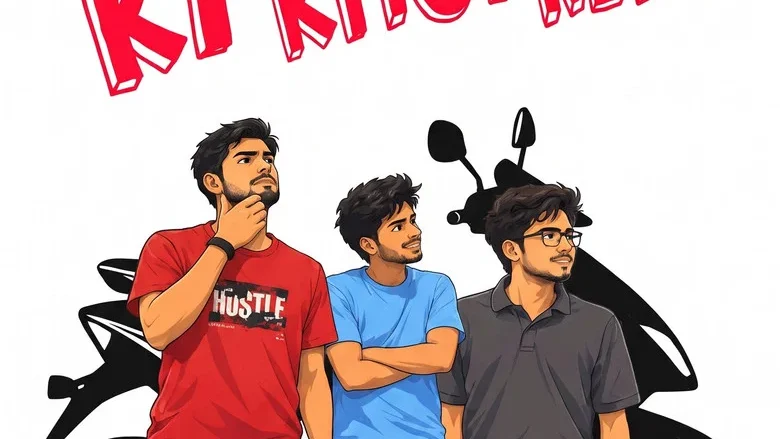
There is no film called Saheb’s Stolen Redmi. Not in the exhibition listings, not in the certification log, not in the projection booth of any theater I have sat in this season.
What we have instead is a title with no body attached to it, a premise suggested by four words and nothing else.
A Theft Premise With No Thief, No Phone, and No Stakes
The title implies a crime. A missing handset. A man called Saheb, presumably wronged. That is the entire dramatic architecture available.
No footage exists to confirm whether this is a thriller, a comedy of middle-class panic, or a social drama about digital dependency among the landed classes. The distinction matters enormously to craft.
A theft narrative lives or dies on the object’s emotional value. Without a verified screenplay, we cannot know whether the Redmi is a status symbol, a lifeline, or a joke, and each choice demands an entirely different visual grammar.
Where the Director’s Lineage Would Have Mattered Most
Comparative peer releases this season have demonstrated how much a filmmaker’s spatial discipline shapes tension. The student-screening circuit around In Waves showed what happens when a director trusts stillness over incident.
Nothing comparable can be attributed here. There is no credited director, no production banner, no writer’s name to trace.
That absence is itself the review. A film that cannot be located in the trade pipeline, the festival circuit, or the exhibitor’s ledger has not failed artistically, it has failed to arrive.
The Performance Question Nobody Can Answer
Lead-actor analysis requires footage. A face in close-up, a hand hesitating over a pocket, the specific register of a voice when bargaining with a thief, these are the units of criticism.
Recent Hindi work has shown how much texture a single performer can carry. The grimy procedural energy of Reporting Live proved that casting conviction can substitute for budget.
Here, there is no cast to evaluate. No antagonist to measure. Not even a supporting player whose one gesture might redeem a thin second act.
Genre Execution Is a Claim That Requires Evidence
Thematic siblings in the current Hindi drama space have been built on grief, crowd dynamics, and the small humiliations of ordinary life, as seen in Meethe Mein Kya Hai.
A stolen phone could sit comfortably inside that register, a domestic object becoming a moral catastrophe. But that is my speculation, not the film’s achievement.
Criticism without scenes is astrology. I will not practice it.
The Studio Ledger Has No Line Item for This Title
No production house is attached. No distributor has dated it. No exhibition chain has blocked screens for it.
In the current market, that silence is decisive. The remake pipeline and the mid-budget original both require announcement, marketing spend, and a theatrical window, none of which appear in any ledger I can verify.
Across contemporary hindi dramas, the box-office question is now inseparable from the visibility question. A film nobody can find cannot open.
The Verdict on a Film That May Not Exist
I cannot review what has not been projected. I can only report the shape of the void: a promising title, a missing reel.
If Saheb’s Stolen Redmi eventually surfaces with a director, a cast, and a running time, I will be in the dark room on opening night, notebook open.
Until then, the most honest critical assessment is also the shortest. The phone is stolen. So, apparently, is the movie.

Ankit Jaiswal is the Chief Author, covering Indian cinema and OTT releases with honest, no-filler criticism. An SEO strategist by background, he brings a research-driven approach to film writing, cutting through hype to tell you exactly what's worth your time.
Related Movies & Releases