Aakasamlo Oka Tara (2026): Dulquer Salmaan Anchors a Sincere, Slippery Ascent

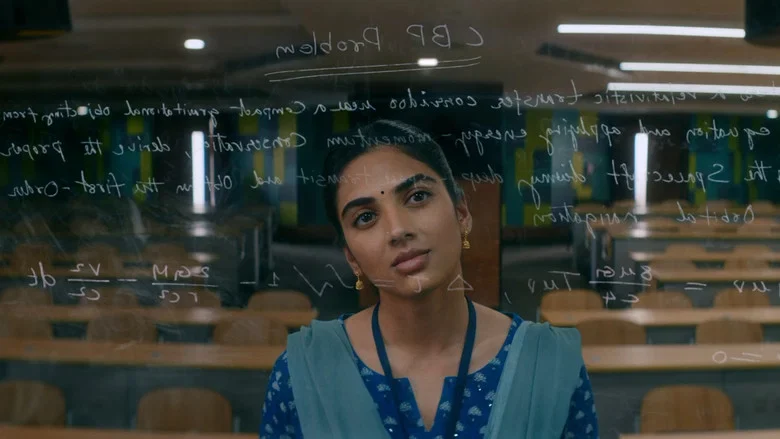
The astrovan arrives early, a boxy metallic promise rolling past a village that has already decided what Kalpana is allowed to become.
Pavan Sadineni’s film spends the next two hours and thirty-nine minutes testing whether that promise can survive a wedding night, a ledger book, and a father’s fist.
A Wedding Night That Refuses To Look Away
The film’s sharpest sequence is its most uncomfortable: Krishna, a middle-class driver, discovers on his wedding night that his bride is sixteen and that her real ambition points at the sky.
Sadineni stages the revelation in near-stillness, no score swell, no theatrical outrage, just a man’s face recalibrating in real time as the room’s social contract collapses around him.
It is the rare mainstream Telugu drama that treats a forced marriage as a moral crisis rather than a plot convenience, and the film earns its opening act on that refusal to soften the premise.

When The District Topper Becomes The Dramatic Engine
What follows is structurally elegant: Kalpana’s examination result, a district-topper rank, converts abstract sympathy into evidence Krishna cannot dismiss.
The screenplay, developed by Gunnam Gangaraju from a story by Sadineni and Vasanth Jurru, makes academic achievement the pivot rather than a decorative montage beat.
Krishna’s support then becomes materially visible, overtime driving shifts, financial strain, a quiet exit from the toxic household, and the film frames empowerment through labour and money rather than encouragement speeches.
This is where the writing is most disciplined, and where the film most clearly departs from the kinetic sensationalism that overtook Aadarsha Kutumbam House No, opting instead for a patient, almost procedural accumulation of sacrifice.
Dulquer Salmaan’s Warmth And The Limits Of Nice
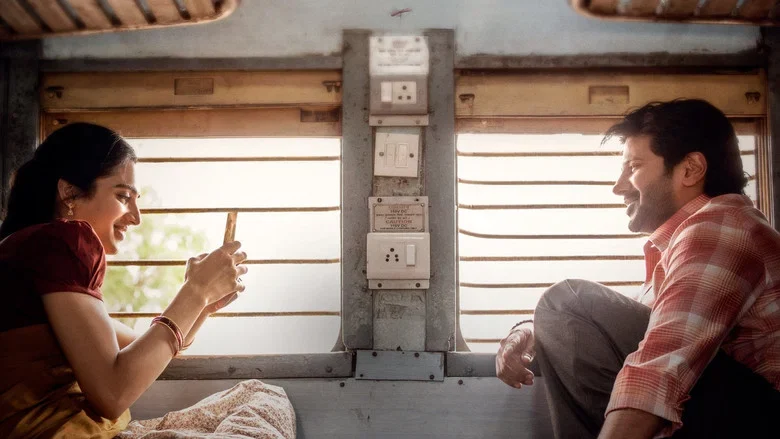
Dulquer Salmaan plays Krishna without a single heroic posture, and the performance’s intelligence lies in its small physical registers: the way he sets down a teacup before absorbing bad news, the way his shoulders stay squared even when his voice drops.
His transition from uninformed husband to active ally happens through behaviour, not confrontation, and it recalls the restrained exhaustion he brought to I'm Game, where charm alone could not carry a sagging second half.
Here the charm is deployed strategically, but the film leans on it too often, letting Krishna’s decency substitute for genuine moral friction once the middle act settles in.
Satvika Veeravalli Carries The Contradiction
The debutant is the film’s most valuable asset, holding Kalpana’s teenage vulnerability and her astronaut certainty in the same frame without letting either collapse into caricature.
Watch her in the examination-result sequence: she does not celebrate, she waits, reading Krishna’s face for permission before allowing herself relief, a micro-choice that tells you everything about how this girl has learned to survive.
The supporting ensemble, meanwhile, functions largely as texture. Murali Sharma and Nassar appear with the easy authority of veterans, but the screenplay gives the in-law and village structure collective weight rather than individual menace.
That works until the final act, when the same anonymous hostility dissolves into anonymous approval with almost no dramatic resistance.
The Reconciliation Problem
Sadineni’s direction is clean and readable, using the wedding-night discovery and the district-topper result as hard turning points that reframe the marriage.
But the closing stretch betrays that discipline: the abusive father apologises, the hostile sister-in-law reconciles, and the village embraces Kalpana as a source of pride, all within a compressed emotional window.
Entrenched patriarchy does not evaporate on a district-topper certificate, and the film’s refusal to dramatise that resistance is its most significant structural failure.
The result is an inspirational payoff that feels earned by the heroine but unearned by the world around her.
The Gunnam Gangaraju Banner And The Remake Economy
Produced under the Gunnam family’s banners alongside Geetha Arts, Swapna Cinema and Lightbox Media, the film arrives with real institutional weight behind it.
That backing matters, because this is exactly the kind of mid-budget, message-forward drama that Telugu audiences have supported theatrically when the emotional hook lands.
The commercial question is whether Dulquer Salmaan’s Telugu-market leverage, built across dubbed releases and his Malayalam crossover appeal, can sustain a two-hour-thirty-nine-minute family drama against the genre’s growing fatigue.
What the film signals more broadly is a tonal maturity across contemporary Telugu dramas, where aspiration narratives are replacing pure mass spectacle, though not yet with the narrative rigor that would make them genuinely memorable.
Sadineni’s earlier crime work, including the leaner storytelling discipline visible in Tom Hardy's The Take, suggests he knows how to compress tension; here he lets the runtime breathe too generously.
The Verdict: A Sincere Ascent That Stops Short Of Orbit
Aakasamlo Oka Tara is a well-intentioned, genuinely moving film about a girl who refuses to let a wedding ring define her ceiling, anchored by a debut performance that announces a real screen presence.
Its failure is not cynicism but convenience, the belief that a district-topper rank can rewrite a village’s moral arithmetic overnight.
The film’s final image lingers on Kalpana looking upward, and the discomfort is that the sky she reaches for is far more complicated than the film that sent her there is willing to admit.

Ankit Jaiswal is the Chief Author, covering Indian cinema and OTT releases with honest, no-filler criticism. An SEO strategist by background, he brings a research-driven approach to film writing, cutting through hype to tell you exactly what's worth your time.
Related Movies & Releases