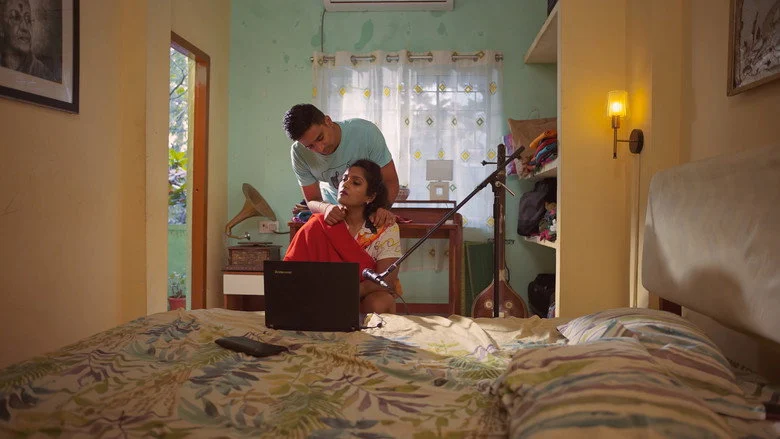
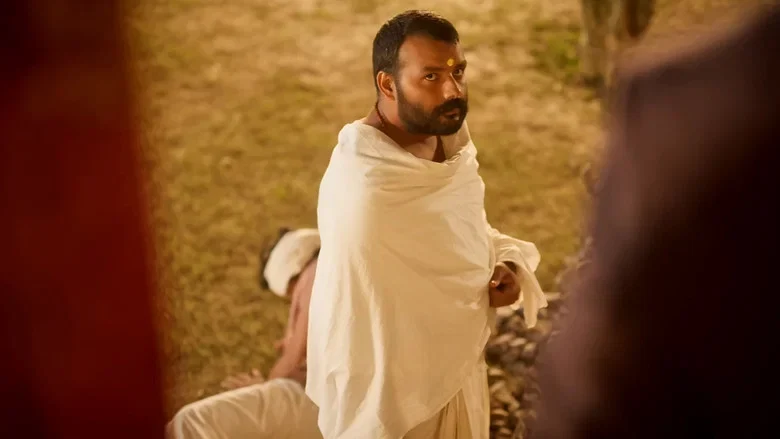
Hanuman Ansh (2026): Shobhinaw Satyaa’s Quiet Devotion Anchors a Flawed But Faithful Biopic


Vishal Chaturvedi’s Hanuman Ansh opens not with a miracle but with a funeral. A boy named Lakshminarayan Sharma watches his mother’s body burn on a riverbank, and the rest of the film is essentially his refusal to accept that she is gone. The camera holds on his face too long, letting the smoke sting, and that uncomfortable duration is the film’s entire thesis: grief is not a plot point here, it is the engine.
What follows is a 150-minute pilgrimage across North India, one that trades dramatic confrontation for something rarer in Hindi cinema, the slow accumulation of small mercies. It is a risk-led structure, and Chaturvedi knows it. He is betting that an audience raised on interval-blockbuster catharsis will sit still for a boy who simply keeps walking.
When a Biopic Refuses to Give You a Villain
Most spiritual biopics cheat by inventing an antagonist, a skeptical bureaucrat, a rival godman, a landlord who evicts the ashram. Hanuman Ansh refuses. There is no named villain, no third-act confrontation, no ticking clock. The opposition is internal: Lakshminarayan’s own doubt, and the sheer weight of a mother-shaped absence he cannot fill.
This is the film’s most radical choice and its most dangerous one. Without an external pressure valve, the middle section risks becoming a slideshow of encounters, a saint here, a hungry family there. Chaturvedi mostly earns the gamble because he keeps returning to the same physical gesture: hands. Hands receiving food, hands folded in namaste, hands that have stopped trembling. The visual grammar is consistent enough to substitute for conflict.
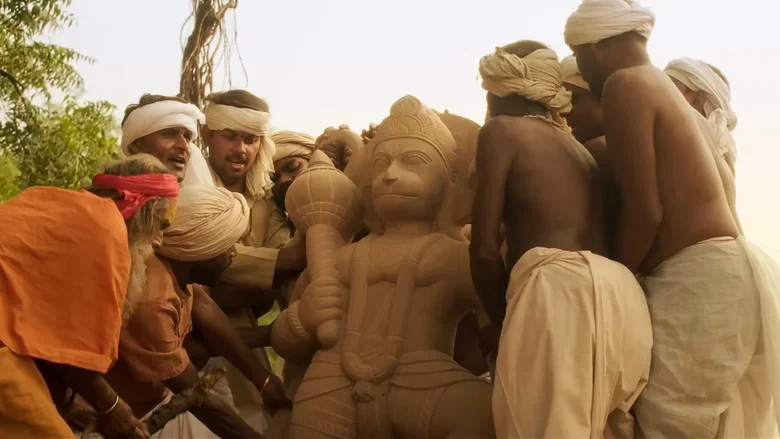
Shobhinaw Satyaa’s Face Does the Work Dialogue Cannot
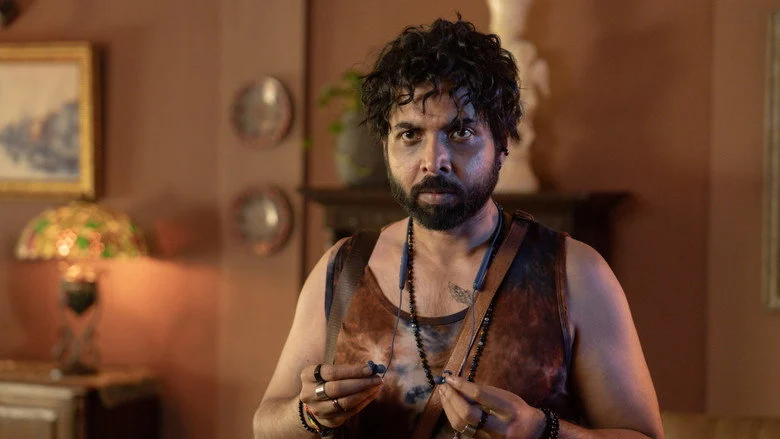
Shobhinaw Satyaa carries the early grief arc with a stillness that borders on the unnerving. In the opening prayer sequence, he does not weep; he stares at the ceiling of a temple with his jaw set and his breath held, as if waiting for God to answer first. It is a performance built on delay, the emotional release is always one beat later than you expect, which keeps the viewer leaning in.
His transition into Neem Karoli Baba in the later reels is where the film’s ambition and its limitations collide. Satyaa softens his shoulders, slows his gait, and lets a faint, almost amused smile settle on his face, a credible shift from seeker to sage. But the screenplay gives him no scene where the transformation is dramatised rather than announced. He simply becomes, and the audience is asked to accept the leap on faith.
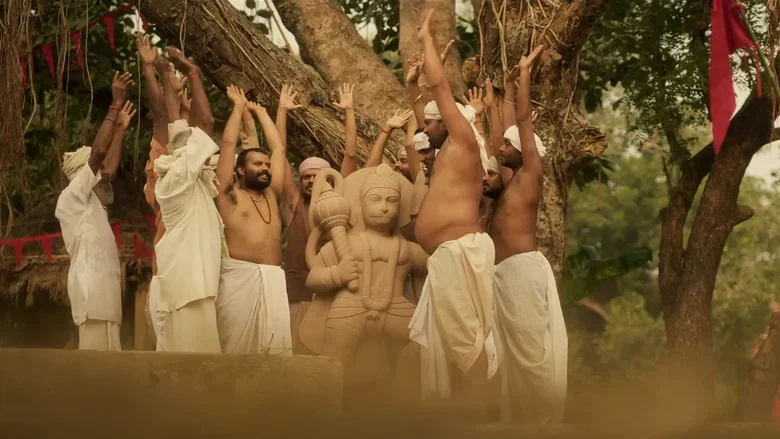
The Supporting Cast Exists as Texture, Not Character
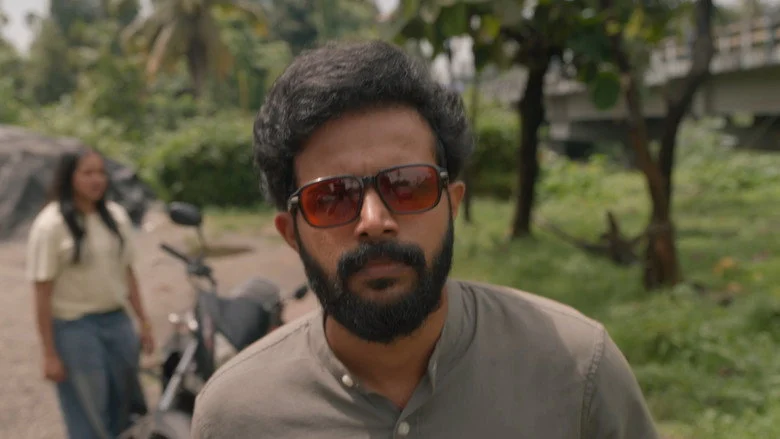
Chandan Anand appears in the travel sequences with a weathered, watchful presence, a man who seems to know something Lakshminarayan does not, but the film never lets him become a person. He is a face on the road, then gone. Purnima Tiwari gets a similarly brief window, her warmth registering in a single feeding sequence before the narrative moves on.
The rest of the ensemble, the temple elders, the village families, the fellow pilgrims, function as a chorus of devotion rather than individuals. This is not a flaw in a film that treats community as the point, but it does mean Hanuman Ansh asks its lead to generate almost all of its emotional voltage alone. He mostly can. Mostly.
A Slow First Half, a Faster Second, and a Fumbled Climax
The first hour is deliberately unhurried. Grief sets the tempo, and the editing lets scenes breathe past the point of comfort, a boy sitting by a river, a priest intoning a shloka in full, a village waking up. It is contemplative, and it will alienate anyone who came for momentum. The second half accelerates through travel and service, and here the film briefly finds its rhythm: the feeding sequences, in particular, are shot with a documentary plainness that makes the compassion feel earned rather than staged.
Where Hanuman Ansh stumbles is the climax. The emergence of Neem Karoli Baba is treated as a spiritual culmination rather than a dramatic event, which is faithful to the subject but dramatically inert. There is no confrontation, no reckoning, no moment where the boy’s grief finally meets its answer. The film simply ends, and you are left holding the emotional weight it never quite released. Compare this to the way Drishyam stages its final reveal, a structural payoff that recontextualises everything before it, and the absence here is glaring.
The Box Office Miracle Is More Interesting Than the Film
Here is the strangest fact about Hanuman Ansh: it opened to ₹10 lakh on day one, on a reported ₹2 crore budget, and then became one of 2026’s genuine box-office phenomena, crossing ₹400 crore worldwide. That trajectory is not a marketing story. It is a word-of-mouth story, the kind that reflects a noticeable pivot across contemporary Indian cinema toward devotional and family-oriented content that mainstream trade analysts consistently underestimate.
But a hit is not automatically a good film, and this review will not pretend otherwise. The film’s commercial success is a testament to its audience, not its craft. What Hanuman Ansh gets right, the sincerity, the refusal to sensationalise, the quiet dignity of service, is real. What it gets wrong, the shapeless middle, the unearned climax, the reliance on Satyaa to carry scenes that the script has not built, is equally real.
What the Film Believes, and Whether You Should
The philosophy of Hanuman Ansh is simple and it is stated repeatedly: love, food, and silent blessings are enough. The film’s most praised sequences are the ones where Lakshminarayan feeds strangers without speaking, and the camera does not editorialise. That restraint is the film’s best quality. It trusts the audience to feel the holiness in a bowl of rice.
Where it falters is in trusting the audience to feel anything else. The grief that launches the journey never fully returns; the mother’s absence fades into abstraction; the man who becomes Neem Karoli Baba is never shown wrestling with the boy he used to be. The result is a film that is moving in fragments but not in whole, a sincere, unhurried, occasionally transcendent piece of devotional cinema that never quite becomes the drama it could have been.
If you come to Hanuman Ansh for spectacle, you will be bored. If you come for the kind of tight, high-stakes plotting that made Sardar 2 a mainstream crowd-pleaser, you will be frustrated. But if you come for a quiet, sincere take on a life lived in service, and you are willing to forgive a film that mistakes stillness for depth in its final act, there is something here worth sitting with. It is not a great film. It is a true one, and sometimes that is enough.
Rating: 3 / 5
See it for the feeding sequences. Remember it for the face of a boy who never stops looking for his mother. Forget the ending, which never arrives.
Ankit Jaiswal is the Chief Author, covering Indian cinema and OTT releases with honest, no-filler criticism. An SEO strategist by background, he brings a research-driven approach to film writing, cutting through hype to tell you exactly what's worth your time.