Gajab Raat (2026): Manoj Bajpayee Anchors a Corrupt-Cop Thriller That Knows Exactly Where to Breathe

A woman’s body exits a moving car in South Delhi, and the night’s first profitable lie is already being negotiated by a policeman who wants to bill her for the inconvenience. Gajab Raat opens on that precise moral inversion: the first responder is the first opportunist.
The Corrupt Cop as Narrative Engine, Not Moral Alibi
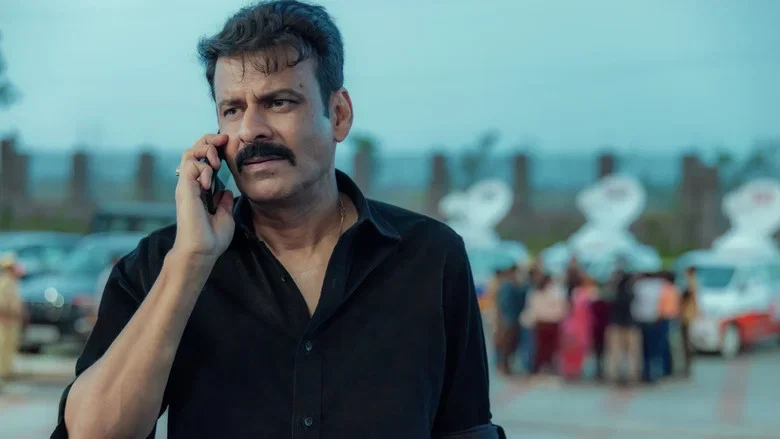
Ritesh Shah’s screenplay, co-written with Neeraj Pandey, hands Manoj Bajpayee’s Ajay Dikshit a ledger instead of a conscience. He arrives at the crime scene mentally pricing the cover-up before he has finished checking the woman’s pulse.
That single recalibration does more work than a dozen procedural cold opens. Because Ajay is compromised from frame one, every subsequent discovery lands as a personal liability rather than a public duty.
The film’s one-night Delhi architecture compresses that liability into something physical. The city becomes a corridor of checkpoints, back rooms, and borrowed cars where every conversation is a transaction with an exit clause.
When the Conspiracy Outgrows the Man Investigating It
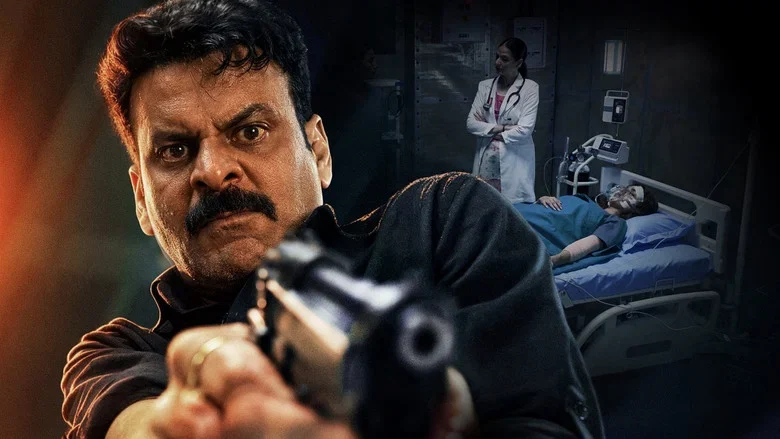
The procedural escalates from a street-level assault to a web with institutional fingerprints, and the shift is where the film’s ambition meets its discipline. Each new layer of the conspiracy is introduced through Ajay’s self-interest, not through exposition.
He follows the money because the money might be his. He follows the woman’s identity because it might be worth something. The screenplay trusts that a corrupt motive can carry an audience through a legitimate investigation.
That structural patience has a lineage worth noting. The compressed, single-location-adjacent tension echoes the deliberate chamber discipline of Last Man in Tower, where Bajpayee’s moral arithmetic unfolded in confined spaces rather than across set pieces.
The Stillness That Manufactures Pressure
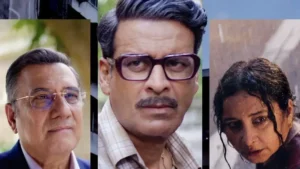
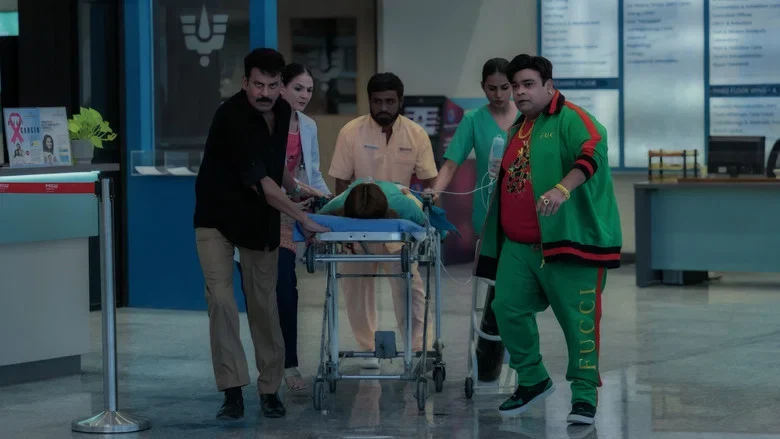
Bajpayee’s performance is built on micro-calculations rather than outbursts. Watch his hands in the early interrogation: they stay busy, rearranging papers, testing the weight of a phone, doing anything but committing to a position.
His voice drops into a low, almost bored register when he is lying, and lifts into an officious bark when he is performing authority for a superior. The vocal gear-shift is the tell, and Shah’s camera holds on it long enough for us to catch it.
Divya Dutta, working in a register of controlled exasperation, gives the film its only clean counterweight to Ajay’s calculated drift, and her scenes carry a clipped, unfinished quality that suggests a life continuing offscreen.
Delhi at Night as a Character With Its Own Agenda
The visual grammar of the film is nocturnal and unglamorous: sodium streetlights, wet asphalt, the flat fluorescent glare of police stations at 3 a.m. The camera stays close enough to read faces but never so close that the city disappears.
Shah’s direction favors long, unbroken takes in domestic interiors and short, jittery coverage in transit, and that rhythm mirrors Ajay’s own oscillation between control and panic. The score stays sparse, mostly a low pulse that surfaces when the character is thinking rather than when he is moving.
The film’s closest genre sibling in the current Hindi thriller space is Reporting Live, which shares the same instinct for grimy procedural texture and morally compromised protagonists.
Where the Conspiracy Threatens to Swallow the Character
The second half widens the scope, and the widening costs the film some of its early intimacy. As the conspiracy grows, the supporting ensemble, Nushrratt Bharuccha, Akshay Oberoi, Saqib Saleem, get less to do than their billing suggests, functioning more as plot coordinates than as fully realized obstacles.
The narrative’s reliance on concealed operators rather than a named antagonist gives the film a diffuse menace, but it also means the final confrontation has to work harder to land with the same specificity as the opening.
That tension between intimate character study and expansive conspiracy is the same fault line running through much of contemporary Hindi thrillers, which increasingly favor atmospheric dread over clean villainy.
The Commercial Arithmetic of a Mid-Budget Thriller
The film arrives without a verified opening-day or first-week box-office record, which in the current exhibition market is itself a data point. A Manoj Bajpayee-led procedural thriller typically trades on his reputation for choosing material with texture rather than scale.
The producing banners have not staked a franchise claim here, and the film’s theatrical footprint reads as a platform play rather than a tentpole bet. The real commercial question is whether the OTT afterlife, Netflix is listed as the digital home, can recoup what the theatrical window leaves on the table.
For Bajpayee, the film extends a run of roles built on compromised authority figures rather than clean heroes, and that specialization has become its own kind of box-office leverage in a market that increasingly rewards actors over IP.
The Night Ends, the Ledger Doesn’t Balance
What lingers after Gajab Raat is not the conspiracy’s architecture but the small, ugly moment when Ajay realizes he has become the thing he was investigating. The film’s final movement refuses the easy absolution of a corrupt cop redeemed by a good deed.
Instead, it leaves him standing in the same fluorescent light where the night began, holding a truth that costs him more than any bribe ever could. It is a conclusion that trusts the audience to sit with the discomfort rather than resolve it.
Shah and Pandey have built a thriller that understands the difference between a man who solves a crime and a man who survives one, and the film’s quiet insistence on that distinction is what makes it worth the ticket.

Ankit Jaiswal is the Chief Author, covering Indian cinema and OTT releases with honest, no-filler criticism. An SEO strategist by background, he brings a research-driven approach to film writing, cutting through hype to tell you exactly what's worth your time.
Related Movies & Releases