Kalpana Aur Yatharth: Salil Singh’s Dual Role Gamble Stumbles Into an Unreal World


Salil Singh writes, directs, produces, and plays the lead in a film that treats a missing wife as a doorway into an unreal world. The ambition is legible in every frame; the execution, at least in this post-production assembly, is another matter.
When the Filmmaker Casts Himself as the Man Who Cannot Let Go
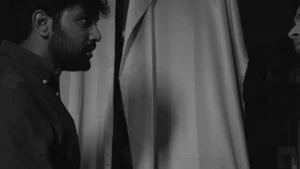
Yatharth is a man whose wife Kalpana has walked out, and the film’s entire engine is his refusal to accept that exit as final. Singh plays him with a stillness that reads less as grief than as withholding, the jaw set, the gaze fixed slightly past whoever is speaking to him.
It is a performance built on absence, which is thematically apt and dramatically risky. When your protagonist’s defining trait is waiting, the camera has to do the waiting for him, and here it mostly doesn’t.
An Unreal World That Never Earns Its Unreality
The premise promises a reality-bending descent, a psychological maze where Kalpana’s departure might be literal or might be Yatharth’s fabrication. That is fertile ground for a mystery-thriller, and Singh clearly knows it.
But the film keeps announcing its own strangeness rather than dramatizing it. Doors open onto rooms that should unsettle us; instead they simply look underlit. The unreal world is described, not felt.
Compare this to the way another recent independent swing at psychological genre territory handled its own unreality, Toxic at least committed to its own lurid logic, even when that logic collapsed. Singh’s film is more tasteful and less alive.
Isha Singh Chauhan Haunts the Frame She Barely Occupies
Kalpana is the film’s gravitational center and its most underwritten presence. Isha Singh Chauhan gets maybe a handful of substantive scenes, and in each she plays the character as already gone, a woman performing departure even when she’s physically in the room.
It’s a smart choice that the screenplay never fully capitalizes on. When she finally shares real screen time with Singh, the temperature in the scene drops rather than rises, and you can feel the film straining for a confrontation it hasn’t earned.
The supporting players, Mohit GGupta as Dinesh, Govind Bajpai as Mr. Bhatia, drift through their scenes with the dutiful blankness of people who suspect they’re in a different movie than the one being made. There’s no antagonist here, only atmosphere, and atmosphere cannot carry a third act.
Where the Camera Goes When Nothing Is Happening
Singh and his crew shoot in long, patient takes that would work beautifully if the performances were generating pressure. They aren’t. The camera holds on Yatharth’s face during silences that feel like padding rather than accumulation.
The lighting skews cold and flat, which suits the emotional register but flattens any visual distinction between the “real” world and the unreal one. If the film’s central conceit is that we cannot trust what Yatharth sees, the images need to betray that instability. They don’t.
The score, wherever it surfaces, does the heavy lifting of telling us we should feel something, a crutch that betrays a lack of confidence in the material itself. This is a film that doesn’t trust its own silences.
The Ending Refuses to Choose, and That’s the Problem
Without spoiling what little the film resolves, the final act gestures toward ambiguity as a virtue in itself. But ambiguity only works when the film has built a coherent enough reality for us to mourn its loss.
Here, the unresolved quality feels less like philosophical openness and more like a filmmaker who couldn’t decide what his own movie was about. The separation, the search, the unreal world, all of it is posed, none of it is pressed.
It’s a shame, because the emotional premise, a man who cannot accept that his wife has chosen to leave, is genuinely rich territory. The contemporary Hindi drama space has room for this kind of intimate, destabilized storytelling, as evidenced by the quieter registers being attempted across contemporary Hindi dramas right now.
A Post-Production Promise That Hasn’t Yet Become a Film
What’s on screen here is a rough assembly of intentions rather than a finished argument. Singh’s commitment to his own vision is admirable; his inability to interrogate it is the film’s undoing.
The comparison to more disciplined independent work is instructive. Where a film like Hanuman Ansh at least anchored its flaws in a coherent emotional throughline, Kalpana Aur Yatharth keeps its protagonist at arm’s length and asks us to care anyway.
And the cautionary tale of an actor-producer-director wearing too many hats is not new, the recent reporting around Danny Trejo's Son Says reminds us that even seasoned performers can be trapped by the projects they sign onto. Singh has trapped himself in his own.
The film’s central question, can you love someone into returning?, deserves a sharper answer than this. What we get is a mood piece that mistakes opacity for depth and patience for tension.
Rating: 2 / 5
Kalpana Aur Yatharth is a film about a man who cannot let go, made by a filmmaker who cannot let go of his own premise long enough to discover what it’s actually about. The unreal world it builds is not strange enough to haunt, and the real one it leaves behind is not specific enough to hurt.

Ankit Jaiswal is the Chief Author, covering Indian cinema and OTT releases with honest, no-filler criticism. An SEO strategist by background, he brings a research-driven approach to film writing, cutting through hype to tell you exactly what's worth your time.
Related Movies & Releases