O.M: Operation Mole (2026): Dhanush’s Dual-Identity Tightrope Anchors a Syndicate Procedural That Rarely Breathes

The first thing Operation Mole asks you to accept is Dhanush wearing two names like a second skin. The second thing it asks is that you never quite know which one is bleeding through.
A Red-Sanders Cartel Is Not a Generic Crime Backdrop, It’s the Whole Point
Rajkumar Periasamy builds his operation inside the temple corridors of Tirupati and Tiruvannamalai, and the geography is the film’s most disciplined asset. Sacred public architecture and concealed criminal logistics share the same frame, so every darshan queue doubles as a surveillance corridor.
The red-sanders economy gives the syndicate a specific texture rather than the usual interchangeable narcotics fog. When the contraband is tied to land, faith and regional power, the stakes stop being abstract.
That specificity is what separates this from the kinetic sensationalism that overtook John Doe, which chose dread over momentum. Periasamy chooses procedure, and mostly holds his nerve.
Two Names, One Face: Dhanush’s Performance Lives in the Micro-Pause
Agent D-402 is the operative; Palanivel and Thirukumaran are the cover identities he must animate without slipping. Dhanush plays the separation in the jaw and the eyes, a half-second delay before he answers a question that a real syndicate man would answer instantly.
Watch how he occupies space in the cartel’s inner rooms. He sits slightly too still, hands folded, letting other men fill the silence, because a mole who talks is a mole who gets caught.
The restraint echoes what Sai Pallavi brought to her devotional register in Ramayana, performance as withheld pressure rather than released emotion. Here the pressure is secular, but the discipline is the same.

Mammootty’s Burma Karthikeyan Owns Every Room He Enters Without Raising His Voice
Mammootty is the film’s gravitational centre whenever he is on screen, and he knows it. Burma “Siya” Karthikeyan, also called Red Hills Karthikeyan, is played with a low, unhurried register, a man who has never needed to shout because the room already knows what he is.
The physical blocking around him is telling. Supporting figures arrange themselves at a respectful distance, and the camera holds on his hands rather than his face during the most threatening exchanges.
What the screenplay does not do is explain him. His command structure and motivations stay deliberately opaque, which works as menace but starves the third act of a clean antagonist to confront.
Sai Pallavi’s Nithya Reddy IPS Is a Structural Promise the Film Never Fully Cashes
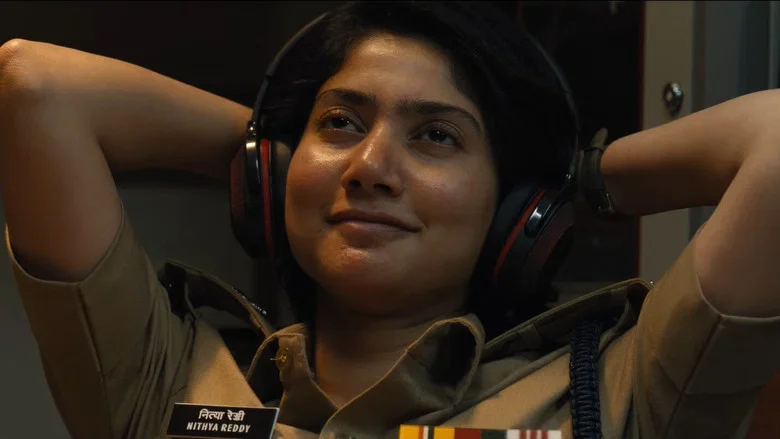
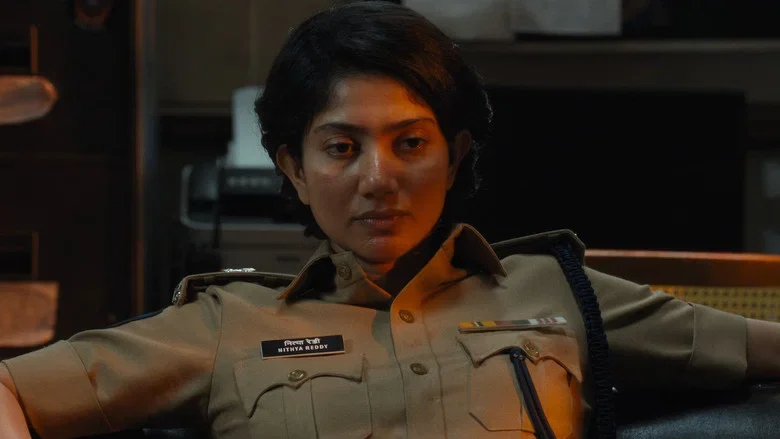
Sai Pallavi enters as enforcement, and her scenes carry a clipped, procedural efficiency that contrasts nicely with Dhanush’s coiled stillness. She reads a room like a report she is already writing.
The problem is functional, not performative. The screenplay never decides whether she is handler, rival investigator or personal counterweight, so her authority remains decorative rather than load-bearing.
Sreeleela’s Roja and the rest of the ensemble, Indrans, Naseeruddin Shah, register as casting texture more than dramatic engines. Their presence signals scale; their absence from the plot’s machinery signals a script spread too thin.
Periasamy’s Direction Trusts Silence, Then Blinks in the Final Stretch
The film’s best passages are its quietest: a corridor conversation shot at medium distance, no score, just the ambient hum of a temple town at dusk. Periasamy understands that undercover tension is a waiting game, not a chase.
Then the climax arrives and the camera starts moving for its own sake. The handheld urgency that replaces the earlier stillness feels like a different film entirely, one that does not trust its own audience to sit with ambiguity.
Just as he demonstrated tighter spatial discipline in Bond 26 territory, the filmmaker strips away decorative moves early, and then reinstalls them when the pressure peaks. It is the one directorial betrayal the film cannot absorb.
The Box-Office Arithmetic: Wunderbar, RTake and a Star Who Still Sells Tickets
Wunderbar Films and RTake Studios are betting on a two-hour-fifty-eight-minute procedural in a market that rewards velocity. The advance sales crossing ₹3.30 crore before opening day suggest the Dhanush–Mammootty pairing is doing the heavy lifting, not the premise.
That is the commercial risk. A red-sanders syndicate thriller is a harder sell than a mass actioner, and the film’s refusal to simplify its criminal economy may cap its ceiling even as it raises its floor among discerning audiences.
For Dhanush, the theatrical leverage remains intact. For the Tamil thriller pipeline more broadly, this is a test of whether patient, geography-specific crime drama can sustain a wide release across contemporary Tamil thrillers without defaulting to formula.
The Verdict: A Disciplined Procedural That Forgets to Land Its Final Blow
Operation Mole is a film about the cost of invisible service, and it earns that theme in its quietest moments rather than its loudest. The mole does not get a parade; he gets a corridor and a decision.
What lingers is not the takedown but the stillness before it, Dhanush’s folded hands, Mammootty’s unhurried voice, a temple town holding its breath. The film’s tragedy is that it does not quite trust that stillness to carry it home.

Ankit Jaiswal is the Chief Author, covering Indian cinema and OTT releases with honest, no-filler criticism. An SEO strategist by background, he brings a research-driven approach to film writing, cutting through hype to tell you exactly what's worth your time.
Related Movies & Releases