John Doe (2026): Arjun Das Anchors a Haunted Procedural That Refuses Easy Catharsis

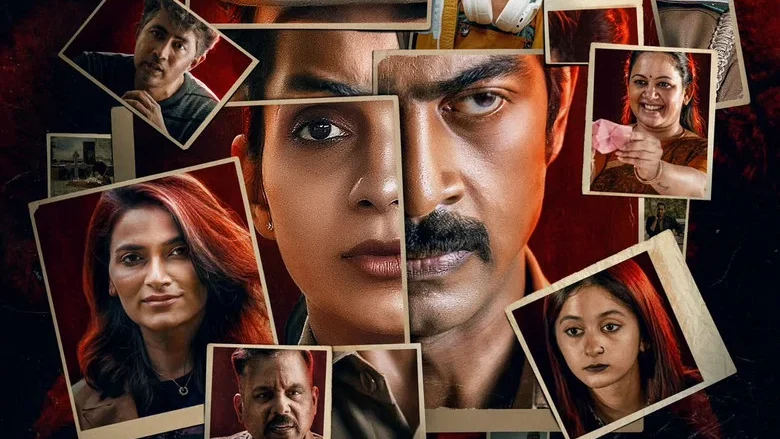
The child is already dead when the film finds him, and nobody knows his name. Madhumita Sundararaman builds her entire thriller on that unbearable administrative blank: a boy reduced to a case number while another boy, still breathing, slips through an ice-cream parlour doorway and vanishes.
Two Investigations, One Wound: The Architecture of Guilt
Arjun Das plays Chandru, a Sub-Inspector whose early error lets a criminal walk out of frame unnoticed, and the consequence arrives as a small body with no identity attached. The film refuses to let that mistake sit as mere plot mechanics; it becomes the engine of every subsequent choice.
Parallel to his search runs a second thread: Sanchana Natarajan’s A Rao takes over the disappearance of Hriday, last seen on a hill-station outing with his sister Lucky. The two case files drift toward each other with the patience of real police work rather than the impatience of screenwriting.
What elevates the setup above the standard missing-child procedural is the paternal stain underneath it. Chandru’s father, a serving officer played by Badava Gopi, spent his son’s childhood telling him he would never wear the uniform, and that sentence echoes louder than any interrogation-room threat.
The screenplay’s structural gamble is making the trafficking racket a discovery rather than a premise, so the audience learns the scale of the crime at the same moment the officers do. Whether that patience pays off depends entirely on how much you trust a film to withhold its villain.
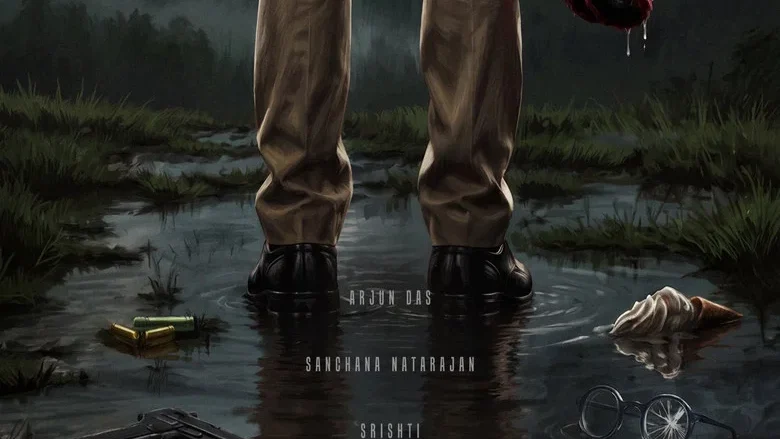
When The Hero’s Competence Is The Actual Mystery
Most crime thrillers ask whether the detective can catch the culprit. This one asks whether he deserves to be holding the badge at all, and the distinction gives every procedural beat a second, quieter charge.
Chandru’s investigation is therefore never just about the dead boy; it is a private audition for a father who isn’t watching. The film links that buried humiliation to his professional paralysis with unusual discipline, resisting the urge to resolve the paternal wound in a single shouting match.
The mid-section convergence, where A Rao’s missing-child file and Chandru’s John Doe inquiry merge into a single trafficking conspiracy, is the film’s most dramatically intelligent move. Two isolated obsessions become one shared burden, and the narrative widens without losing its intimate grip.
Where the structure risks strain is in the escalation from one unidentified death to a systemic racket, a jump that demands the audience accept a leap of institutional scale on faith. The film earns most of that leap, but the seams show in the final third.
The confession that closes the investigation arrives as procedural resolution rather than emotional reckoning, leaving the culprit’s capture feeling tidier than the moral mess the film spent two hours building.
Arjun Das, Stillness, and the Weight of an Unanswered Question
Arjun Das has always been a performer who weaponises stillness, and here he plays Chandru as a man who has learned to absorb insults rather than return them. Watch his shoulders in the scenes opposite his father: they do not slump, they set, like concrete curing under pressure.
The role demands two registers in constant negotiation, the officer performing competence and the son quietly certain he is a fraud, and Das lets the second bleed into the first through micro-adjustments of the jaw and a gaze that keeps sliding off-centre during briefings.
There is a specific physical exhaustion in his final interrogation scenes that recalls the psychological weariness he carried through Once More, though here the grief is buried under procedure rather than romance. The comparison flatters both performances.
Sanchana Natarajan’s A Rao is the film’s steadying counterweight, a presence of professional calm that refuses to become either romantic subplot or rescue mechanism. Her scenes with Das are built on shared case files and clipped exchanges, and the restraint is welcome.
Srishti Yadav’s Darshana carries the community’s raw panic after Hriday’s disappearance, and her early scenes at the police station have a frayed, unpolished urgency that grounds the film’s more cerebral ambitions.
The Hill-Station Chill: What the Camera Withholds
Sundararaman shoots the Kerala–Tamil Nadu borderland as a place of soft light and concealed threat, letting the hill-station greenery feel less like scenery and more like cover. The camera holds on doorways after characters exit them, a small habit that keeps the audience scanning for what the frame refuses to show.
Just as the comparative discipline of CBS' Cupertino demonstrated how procedural storytelling thrives on restraint, this film strips away decorative flourishes to prioritise the friction between two investigators and their own doubts.
The pacing is deliberate to a fault in the first half, where the dual setup asks for considerable patience before the cases connect. The second half accelerates into trafficking territory with a momentum that occasionally outruns the emotional groundwork laid earlier.
What the film lacks is a distinctive sonic or visual signature to match its psychological ambitions; the craft is competent and controlled, but rarely astonishing in the way the premise invites.
The Trafficking Reveal and the Limits of Procedural Closure
When the investigation expands from one dead child to a network of exploited children, the film briefly becomes something larger and more uncomfortable than a missing-person thriller. The shift is thematically potent, but it also exposes how much of the earlier tension depended on not knowing.
The screenplay resists the kinetic sensationalism that overtook Enemy Of The Smuggler, opting instead for a slower, more suffocating dread. The choice is admirable, though it leaves the climax feeling more resolved than the film’s moral questions deserve.
The culprit’s confession closes the case but not the wound, and the film seems aware of this gap without fully dramatising it. Chandru’s father never receives a reckoning scene, and that absence is either the film’s wisest restraint or its most frustrating evasion.
What lingers is the image of an unnamed child finally given a name, a small bureaucratic act that the film treats as a form of justice. It is a modest ending for a story that promised something more seismic.
The Box-Office Question: Original IP in a Remake-Saturated Market
With no verified production banner attached to its release and a limited theatrical footprint, John Doe enters a market where original Tamil thrillers must fight for screens against franchise sequels and star-vehicle remakes. The film’s commercial fate will hinge on word-of-mouth among viewers hungry for investigative drama over spectacle.
Arjun Das remains a performer with critical respect but uneven box-office leverage as a solo lead, and this film’s subdued marketing profile suggests the distributors are betting on niche appreciation rather than mass opening. That strategy can work, but it rarely produces the numbers that justify a sequel or a franchise.
For a landscape where contemporary Tamil thrillers increasingly lean on familiar remake templates, an original procedural with a trauma-driven protagonist is a genuine risk. Whether that risk is rewarded depends less on the film’s quality than on whether audiences still show up for stories that ask them to sit with discomfort.
The Uncomfortable Resolution: A Name Is Not Absolution
John Doe ends with the case closed and the child identified, but the film never pretends that paperwork heals the people who failed him. Chandru’s father remains unrepentant, the trafficking network’s reach remains implied, and the hero’s self-doubt is not so much resolved as temporarily quieted.
That refusal of catharsis is the film’s most honest instinct, even as it leaves the final act feeling emotionally underpowered. A thriller built on a father’s cruelty should end with that cruelty confronted, not merely survived.
Still, there is something quietly radical in a Tamil crime film that treats an unidentified child’s death as a tragedy of administration rather than a spectacle of violence.
The film asks who we are willing to name, and it answers with a badge, a case file, and a son still trying to prove he was worth the uniform.
It is a haunted, uneven, frequently arresting piece of work, and it lingers longer than its tidier final scenes suggest it should.

Ankit Jaiswal is the Chief Author, covering Indian cinema and OTT releases with honest, no-filler criticism. An SEO strategist by background, he brings a research-driven approach to film writing, cutting through hype to tell you exactly what's worth your time.
Related Movies & Releases