Haiwaan (2026): Saif Ali Khan Anchors a Blind-Protector Thriller That Never Finds Its Footing


Priyadarshan opens Haiwaan with a sound cue. Somewhere inside a Mumbai high-rise, a latch clicks, a floorboard gives, and Shyam Rane tilts his head a half-inch to the left. He cannot see the intruder. He can hear him. That single gesture, Saif Ali Khan’s chin angling toward a noise the camera refuses to show us, is the film’s entire thesis in miniature: danger lives in the register of the audible, and the man who can read it holds the only advantage in the room.
For roughly forty minutes, that advantage is enough. Then the screenplay starts explaining itself, and the tension begins to seep out of the frame.
A Blind Protector Built On Sensory Logic, Not Superhero Noise
The premise is clean. Shyam manages a residential tower, trusted by the building’s most powerful resident, Judge Pradhan (Boman Irani), a man carrying a judicial error like a stone in his shoe. The error has a name: Parshuram Gokhale, freshly released from prison, walking back toward the people who put him there. Somewhere in a convent school sits the judge’s daughter, the soft target nobody is supposed to know about.
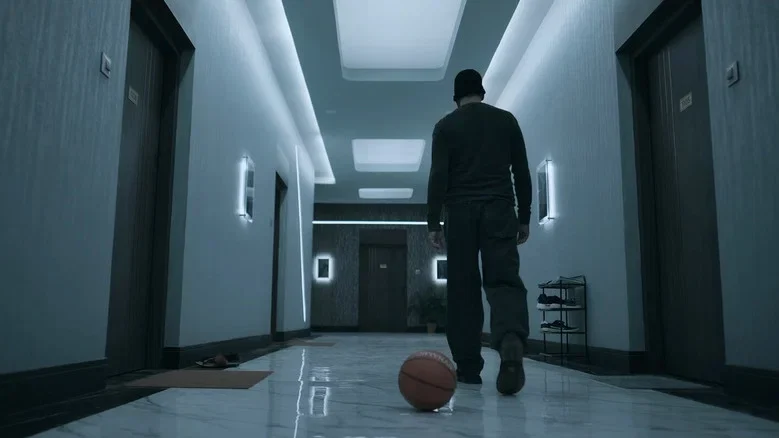
What works early is the staging of Shyam’s perception. Khan plays him alert rather than serene, a man whose stillness is a form of listening. When he crosses a corridor, his hand skims the wall at shoulder height, not for balance, but for measurement. When he fights, the choreography builds from sound: a footfall behind his left ear, a breath two feet off his flank. It is a grounded system, and Khan commits to it without the actorly glow of a man performing disability for applause.
The sensory premise also gives Priyadarshan his cleanest suspense mechanism in years, though it arrives in a season where the director’s instincts have been tested elsewhere. The quiet, faith-anchored patience of Hanuman Ansh found its power in withholding; Haiwaan understands withholding intellectually but keeps surrendering to the urge to show.
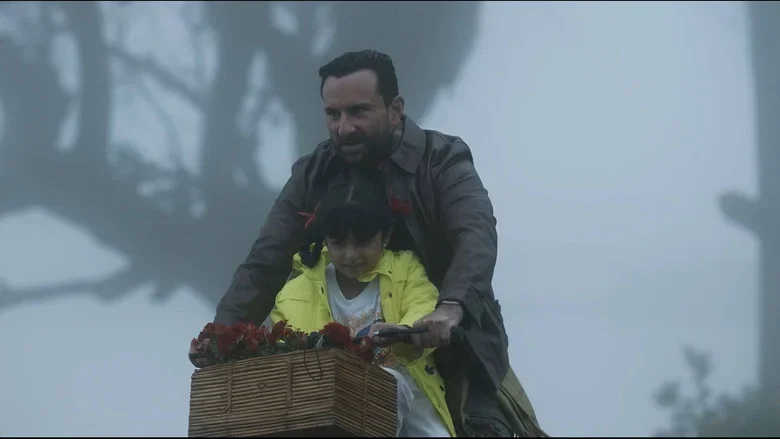
The Wrongful Conviction Is a Strong Hook Trapped in a Weak Middle
Gokhale’s grievance is concrete, which is the film’s smartest structural inheritance from its source material. He was not born evil; he was made into an avenger by a courtroom. That gives Akshay Kumar something to play beyond menace, a man whose volatility is the residue of institutional betrayal.
Kumar leans into the instability. In his early scenes he holds his jaw slightly off-center, lets his eyes drift past the person he’s speaking to, and delivers his lines at a volume just below what the moment requires. It is a controlled reading of an uncontrolled man, and it works. What it cannot fix is a screenplay that reduces him, by the second hour, to a figure who appears, threatens, and retreats on schedule.
The middle stretch is where Haiwaan loses its grip. The film converts its cat-and-mouse logic into a repetitive protection procedural: surveillance, near-miss, exposition, repeat. Rohan Shankar and Abilash Nair’s script delays momentum instead of compounding it, and the daughter’s location, the film’s single strongest ticking clock, gets buried under subplot traffic that never earns its screen time.

Khan Holds the Frame While the Ensemble Around Him Thins Out
The supporting architecture is the film’s most visible structural failure. Boman Irani gives Judge Pradhan a genuine weight of remorse, watch the way he folds his hands when he confesses the wrongful conviction to Shyam, fingers laced too tightly, as if the apology is being physically restrained. It is a real performance in a role that the screenplay never expands beyond its function.
Shriya Pilgaonkar and Saiyami Kher exist inside the protective framework rather than beside it. They register as stakes, not as people, and the material gives them no scene in which to complicate the film’s emotional geometry. Sharib Hashmi, a performer capable of finding strange human corners in thin writing, is reduced here to a pressure point in the thriller machinery. The ensemble is not miscast; it is underfed.
That imbalance pushes the entire weight onto Khan, and he carries it better than the film deserves. There is a moment in the second act where Shyam stands in a doorway, hears a sound from the wrong direction, and simply stops moving. Khan holds the stillness for an uncomfortably long beat, long enough that the audience starts scanning the frame for the threat he has already registered. It is the kind of directorial patience the film otherwise refuses to sustain, and it lands precisely because it trusts the performer over the plot.
The Finale Betrays the Discipline the Film Spent Two Hours Building
Then comes the climax, and the film abandons its own grammar. The confrontation between Shyam and Gokhale escalates into heightened horror-thriller staging, flickering light, exaggerated sound design, a theatricality that belongs to a different movie. The score, which had been functional and unobtrusive, swells past the drama it is meant to support. What should be the film’s most focused sequence becomes its most diffuse.
The tonal mismatch is not a small thing. A thriller built on sensory restraint cannot end on sensory overload without paying a price, and Haiwaan pays it. The rescue-and-reckoning movement loses the spatial clarity that made the earlier action credible, and the final image lands closer to shock-theater than to the reckoning the story had been earning.
At two hours and forty-four minutes, the film also asks for patience it does not consistently reward. The first half stretches its setup; the second half improves its rhythm but still extends a premise that needed ninety minutes of tension, not a hundred and sixty of procedure. Across the broader landscape of recent theatrical releases, this is a familiar pattern, star-driven remakes that mistake runtime for gravity.
A Star Vehicle That Runs on One Engine
What the film does have is Khan, and he is enough to justify a look for the right viewer. His Shyam is a genuine piece of screen construction: a man whose blindness is not a limitation to be overcome but a different operating system for reading a room. The reunion with Kumar, their first shared frame in years, delivers the charged contrast the marketing promised, one performer all stillness, the other all tremor.
It is also a film with a thinner emotional core than the remake structure pretends, and the comparison to more disciplined procedural work is instructive. The calculated restraint that Drishyam brought to its cat-and-mouse architecture is precisely the quality Haiwaan keeps reaching for and dropping. Priyadarshan knows how to stage a threat. He is less certain how to sit inside one.
Rating: 2.5 / 5
This is a film for Saif Ali Khan loyalists, for viewers who want to watch a gifted actor solve a spatial problem with his ears and his shoulders, and for anyone curious about how a Malayalam thriller premise translates into a Hindi star vehicle. It is not for audiences who need their suspense to compound rather than repeat, or who will be irritated by a finale that trades the film’s hard-won discipline for a light show.
There is a version of Haiwaan, tighter, stranger, more willing to trust its own silence, that would have been the best Hindi thriller of the year. What we got instead is a reminder that a great premise and a great performance can carry a film a long way, but not all the way to the ending it needed.
Ankit Jaiswal is the Chief Author, covering Indian cinema and OTT releases with honest, no-filler criticism. An SEO strategist by background, he brings a research-driven approach to film writing, cutting through hype to tell you exactly what's worth your time.