The Transition (2026): A Posthumous Portrait That Turns Loss Into Form

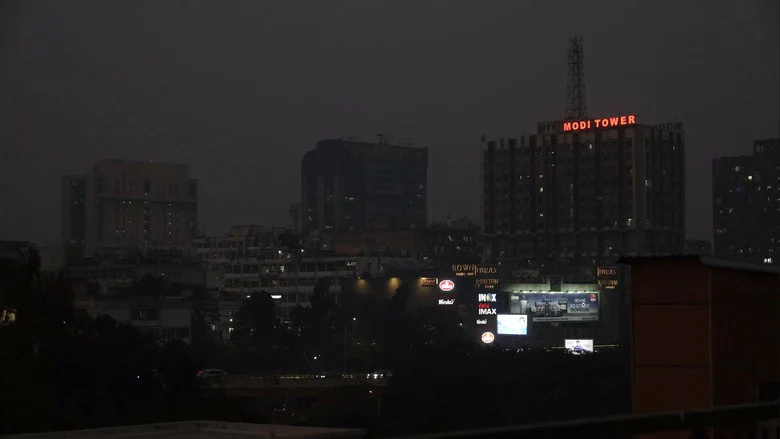
Thomas Heise begins filming Berlin’s Schönhauser Allee, a street he has known for decades, and then he dies. His collaborators, Peter Badel and Chris Wright, inherit the footage and finish the project as an act of both mourning and archival preservation.
This is not a documentary that pretends completion was always the plan. The film’s structure openly carries the scar of its own interrupted production, and that wound becomes its most honest formal gesture.
Heise’s Presence Is the Film’s Quiet Engine
Heise is not an actor, and Transition makes no attempt to stage him as one. His material functions through lived observation, the kind of patient attention that only a filmmaker with a decades-long relationship to a place can summon.
The opening sequence, where he initiates the Schönhauser Allee project, carries the weight of a man starting what he likely knew might be his last work. There is no performance beat to praise here, only the raw residue of a serious artist’s final intentions.
Direction and Screenplay: A Structure Built on Absence
Badel and Wright make a fascinating choice: they refuse to smooth over the rupture of Heise’s death. Instead, the film aligns its own architecture with the unfinished status of its subject, letting the archival continuation function as both method and meaning.
The flaw is that this approach risks alienating viewers unfamiliar with Heise’s broader body of work. The film assumes a baseline knowledge of his documentary tradition, and without that context, some stretches feel like private grief rather than public cinema.
Archival Construction Over Reenactment
Transition never resorts to reenactment, a decision that keeps the film honest but also limits its dramatic reach. The archive-driven sequences that frame Heise’s life within Berlin’s layered history are the film’s most praised material, and rightly so, they preserve his personal and political perspective with unusual clarity.
The posthumous completion sequence, built entirely from existing footage, is where the documentary finds its truest voice. It does not try to invent a conclusion; it simply assembles what was left and lets the gaps speak.
This is a documentary that understands its own genre deeply. The unfinished production context is not a production note to be hidden; it is the film’s central subject, and the collaborators treat it with the gravity it deserves.
Badel and Wright: Custodians, Not Authors
Peter Badel and Chris Wright function less as traditional directors and more as careful custodians of a dead colleague’s vision. Badel helps structure the archival material into a coherent documentary, while Wright contributes to the posthumous shaping of the film’s final form.
Their restraint is admirable, they never impose a conventional narrative climax where none belongs. The film closes by completing Heise’s unfinished work through reflective assembly, and that choice signals a deep respect for authorship that most completion projects lack.
The Politics of Memory and the Audience Question
There is no manufactured controversy here, only the inherent politics of who gets to finish a dead artist’s work. The film’s real tension is between an unfinished personal vision and the collaborators’ effort to honor it without overwriting it.
This is strictly class audience territory, documentary purists and Heise devotees will find it essential, while viewers expecting plot-heavy storytelling will feel stranded. The archive material carries genuine historical value for anyone interested in Berlin’s social transformation through the documentary lens.
For a deeper look at how filmmakers handle difficult subject matter with uneven results, browse more Hindi Drama reviews.
Transition is not a film you watch; it is a film you sit with. The Schönhauser Allee imagery and the archival reconstruction sequences reward patient viewers who understand that some stories are only complete in their incompleteness. I found myself more moved by the project’s circumstances than by any single scene, which feels exactly like the point Badel and Wright are making.
If you are a student of documentary form or a follower of Heise’s career, this is essential viewing on OTT or at a festival screening. If you need a conventional narrative arc, look elsewhere, this film will not meet you halfway.
For a similar meditation on how a strong central presence can carry uneven material, consider Mirzapur review.
Transition (2026) earns a reserved 3 out of 5 for turning a tragedy of authorship into a formally coherent, if demanding, archival document.
Dulquer Salmaan’s I m verdict similarly tests how much a single presence can carry a fragmented structure.

Ankit Jaiswal is the Chief Author, covering Indian cinema and OTT releases with honest, no-filler criticism. An SEO strategist by background, he brings a research-driven approach to film writing, cutting through hype to tell you exactly what's worth your time.
Related Movies & Releases