Ikka (2026): Sunny Deol s stands out while the narrative loses grip

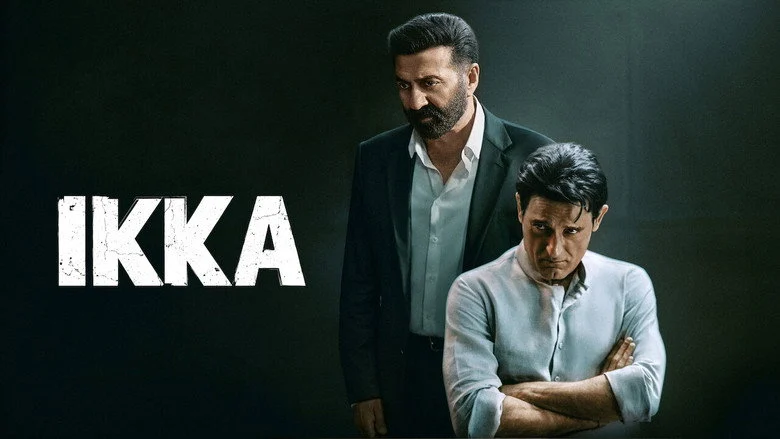
The moment Arjun Mehra learns his daughter has advanced-stage cancer, and that the only compatible bone marrow donor is the very man he believes is guilty of a brutal crime, the film locks into its most potent gear. From that instant, Sunny Deol’s celebrated lawyer is no longer a man of principle but a father cornered by biology and circumstance, and the courtroom becomes a stage for his unraveling.
That setup is the film’s sharpest card, and for a while, it plays it with genuine conviction. But Siddharth P. Malhotra’s legal thriller, written by Althea Kaushal and Mayank Tewari, soon trades its taut moral premise for broad melodrama, letting the noise drown out the nuance.
Sunny Deol’s best weapon is the silence between his shouts
Deol has built a second career on righteous fury, and Ikka gives him plenty of room to roar. His strongest beats, though, come when Arjun’s public confidence collides with private panic, the early refusal scene, where he declares only a miracle would make him defend Shauryaman, lands because Deol underplays it.
Later, when the moral breakdown hits, the actor finds a vulnerability that the script too often buries under speechifying. The performance works in fragments, not as a whole.
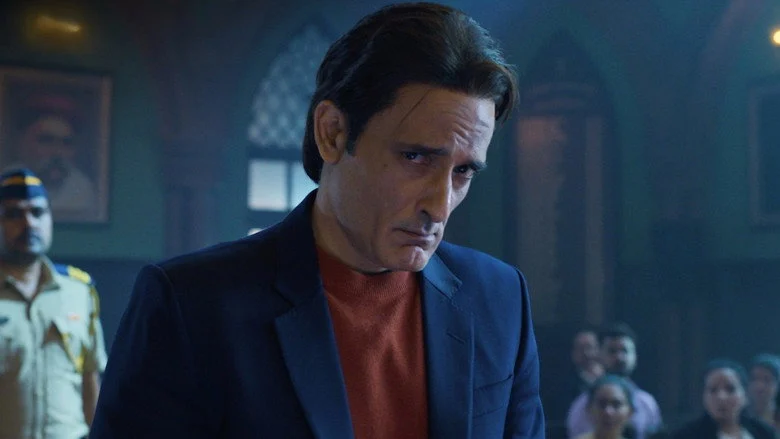
Akshaye Khanna’s antagonist is a study in controlled menace
Khanna, playing the politically protected Shauryaman Gaur, understands that true power doesn’t need volume. His presence is most effective in the unspoken tension between him and Arjun, two men with history, circling each other in the courtroom like predators waiting for a misstep.
The film frames him as socially untouchable rather than merely criminal, which gives the legal conflict a sharper edge. But the writing doesn’t give Khanna enough to do beyond smirking and looming, and his character’s menace fades as the melodrama swells.
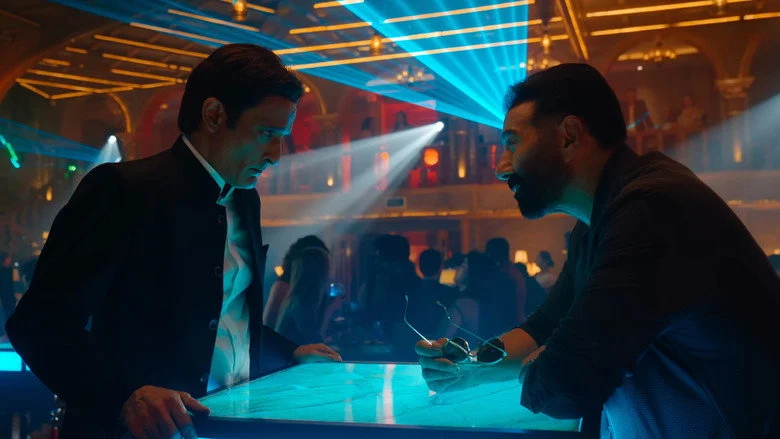
A premise that promises more than the execution delivers
The central dilemma is cleanly stated: defend a man you believe is guilty, or watch your daughter die. That hook is immediate, personal, and dramatically rich, the kind of moral crucible that courtroom dramas are built on. The film understands this, and it keeps the stakes visible throughout the 140-minute runtime. But clarity of premise doesn’t guarantee clarity of execution.
The courtroom stretches, which should be the film’s spine, are repeatedly criticized for leaning on speechifying rather than procedural tension. The antagonist’s political power is asserted more than dramatized, and the legal maneuvering feels formulaic. When the case should tighten, the film loosens into repetitive emotional beats.
Multiple reviews, including the Times of India’s 2.5/5, noted that the first half loses momentum after its opening setup. The Indian Express put it bluntly: “Melodrama wins over Sunny Deol’s ‘dhai kilo ka haath’.” The genre elements, the mystery, the thriller mechanics, are weakened whenever the film chooses volume over precision.
Tillotama Shome and Dia Mirza anchor what the script leaves loose
Shome, as the public prosecutor, gives the film its most disciplined performance. She is repeatedly identified as forceful, and her presence sharpens the courtroom scenes by providing a genuine counterweight to Deol’s theatricality. Her cross-examinations carry a quiet menace that the film’s louder moments lack.
Dia Mirza, playing Arjun’s wife, grounds the domestic subplot with the kind of restrained grief that the film elsewhere overplays. She functions as the stabilizing presence during the daughter’s illness, and her scenes with Deol hint at a marriage tested by more than just the case. Akansha Ranjan Kapoor’s Soma Mittal is central to the inciting incident, and while her role is limited, the film’s entire plot hinges on her fate.
Hindustan Times summarized the imbalance sharply: “Sunny Deol shouts, Akshaye Khanna repeats Dhurandhar in a flat courtroom drama.” For a film with two such capable leads, the script’s refusal to trust them is its most frustrating choice.
For more on how Hindi legal dramas handle their courtroom stakes, browse more Hindi Thriller reviews.
A moral dilemma that deserves sharper teeth
Ikka’s premise is its greatest asset and its biggest betrayal. The idea of a principled lawyer forced to defend a man he despises, with his daughter’s life as the price, is the stuff of great tragedy. The film gets the setup right, and the initial linking of the criminal case to the medical emergency is widely noted as its strongest dramatic hook.
But the execution falters where it matters most. The pacing is uneven, with the first half slow to settle and the second half only partially recovering. Cinema Express noted “too many aces up its sleeve, ” suggesting the film overstuffs its narrative instead of trusting its core conflict. The result is a legal thriller that gestures toward moral complexity but settles for melodramatic comfort.
I found myself wishing the film had trusted its actors and its premise more, there’s a tighter, tenser movie buried inside this one, gasping for air beneath the bombast.
Ikka is a watch for Deol and Khanna completists, or for those who enjoy courtroom dramas that prioritize emotion over procedure. The central moral conflict is compelling enough to carry you through the sluggish stretches, and the performances, particularly Shome’s, offer real compensation. Watch it for the premise, stay for the actors, and accept that the film never quite becomes the thriller it promises to be.
Ikka (2026) earns a middling 2.5 out of 5, a film with a strong hook and capable hands, undone by its own insistence on shouting when whispering would have cut deeper.
For a more disciplined take on moral compromise under pressure, consider Idhayam Murali review.
If you prefer your courtroom clashes with tighter pacing, Dhamaal 4 verdict offers a different kind of tension.

Ankit Jaiswal is the Chief Author, covering Indian cinema and OTT releases with honest, no-filler criticism. An SEO strategist by background, he brings a research-driven approach to film writing, cutting through hype to tell you exactly what's worth your time.
Related Movies & Releases