James McAvoy Recalls Being Bullied on Band of Brothers Set

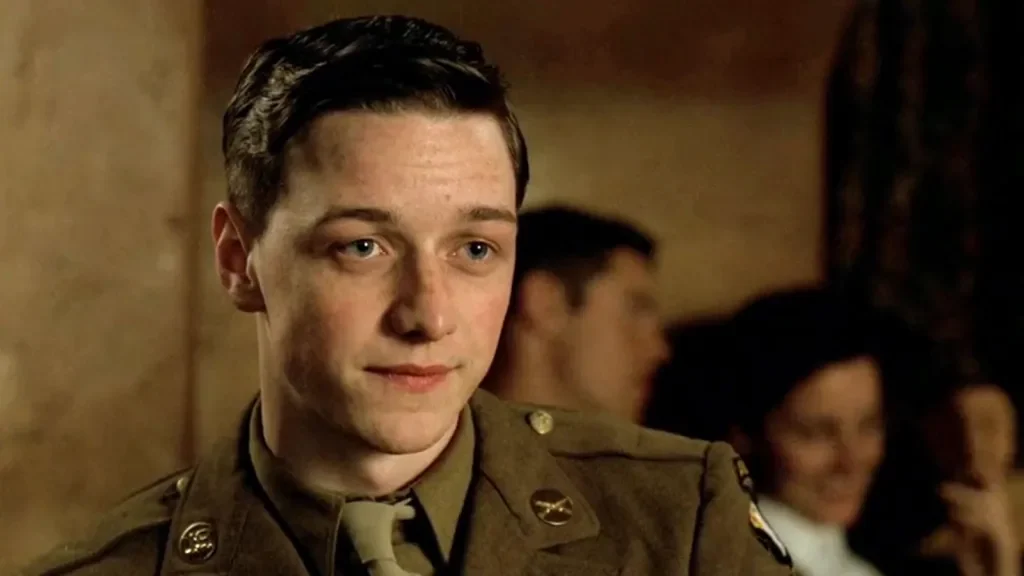
- The Scoop: James McAvoy revealed he was mocked by an unnamed co-star on his first day of professional acting on HBO’s 2001 miniseries Band of Brothers.
- The Incident: McAvoy said the actor rallied his friends to point and laugh at him for roughly three minutes during a crowded bar scene.
- The Fallout: McAvoy declined to name the alleged bully but confirmed it was not David Schwimmer, crediting Dexter Fletcher and Robin Laing for their support.
James McAvoy has publicly recounted being bullied on the set of HBO’s landmark 2001 World War II miniseries Band of Brothers, describing the ordeal as a jarring initiation into professional acting. The incident, which McAvoy detailed during an October 12 appearance on Watch What Happens Live with Andy Cohen, occurred on his very first day on a professional set after graduating from drama school. The revelation adds a stark behind-the-scenes footnote to one of television’s most acclaimed and sprawling ensemble productions.
“One of the guys in that picture decided to bully me, on my first day as a professional actor out of acting school,” McAvoy said. “He got him and his buddies to just stand pointing at me and laugh at me for like three minutes.”
A Rookie’s Welcome: Inside the Hierarchy of an Epic Ensemble Shoot
McAvoy appeared in the fourth episode, “Replacements,” as Private First Class James W. Miller, a role that carried a substantial emotional arc and a significant number of lines. He recalled that many of the established actors had already spent nine or ten months on the production, often receiving only a single line across one episode. That disparity, he suggested, bred resentment among the ranks when a fresh face arrived with a meatier part.
The alleged incident unfolded during the filming of a crowded bar scene, where McAvoy said the unnamed actor mobilized his friends to point and laugh at him for an extended stretch. McAvoy declined to identify the perpetrator but explicitly stated it was not David Schwimmer, who played Captain Herbert Sobel in the miniseries. The moment stands as a rare window into the social pressures that can simmer beneath the surface of a massive, months-long shoot.
Dexter Fletcher and Robin Laing, both of whom had already logged extensive time on the production, intervened by offering McAvoy their company and support. Their gesture, he noted, helped counterbalance the hostility he encountered from the other camp. It is a reminder that on sprawling ensemble productions, veteran cast members often shape the on-set culture as much as any director.
From Band of Brothers to A-List: McAvoy’s Long Game
The anecdote lands with particular force given McAvoy’s subsequent trajectory. He has since become one of the most bankable and versatile leading men in the industry, headlining franchises such as X-Men and Split, and earning critical acclaim for stage and screen work on both sides of the Atlantic. The contrast between his tentative first day and his current standing underscores how early career hazing rarely predicts the arc of a durable talent.
Band of Brothers, produced by Steven Spielberg and Tom Hanks, remains a benchmark for prestige television, and its cast has become a who’s who of working actors. That McAvoy’s experience was marred by pettiness rather than mentorship offers a less romantic view of the production’s legacy. It also highlights how the industry’s competitive pressures can manifest even on a project celebrated for its camaraderie.
McAvoy’s decision to share the story without naming the culprit keeps the focus on the broader issue of on-set conduct rather than a personal vendetta. For a trade audience, the takeaway is clear: even the most decorated productions are shaped by human friction, and the actors who survive it often go on to define the next generation of stardom. The episode serves as a cautionary note for how newcomers are treated behind the camera, a subject that continues to resonate across the industry, as monitored across our trade entertainment desk.

Ankit Jaiswal is the Chief Author, covering Indian cinema and OTT releases with honest, no-filler criticism. An SEO strategist by background, he brings a research-driven approach to film writing, cutting through hype to tell you exactly what's worth your time.
Related Movies & Releases