Mookuthi Amman 2 (2026): Nayanthara’s Divine Duality Can’t Tame Sundar C’s Cluttered Mythology

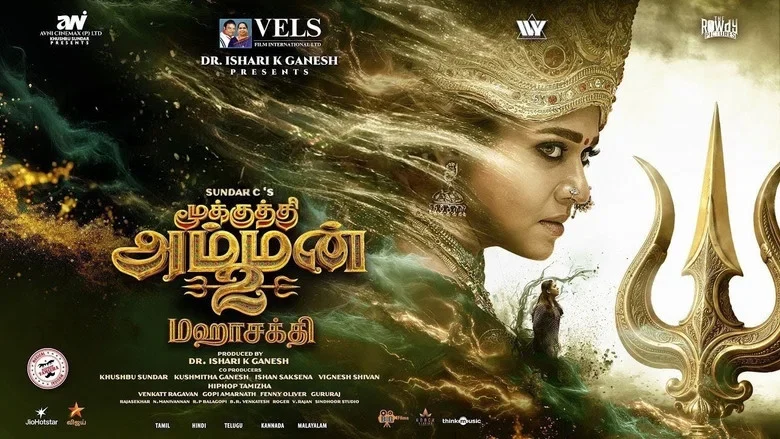
The temple bell clangs before the goddess appears, and Sundar C wants you to feel that delay in your chest. What follows is a sequel that doubles its pantheon and halves its focus.
When A Goddess Franchise Forgets Which Timeline It’s Defending
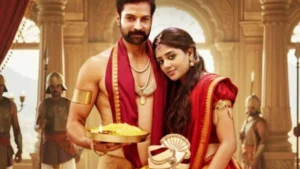
The film opens on a queen’s sacrifice, a prince bundled away from invaders, and two cosmic forces circling each other with apocalyptic patience. It is the most confident stretch of the entire two-hour-twenty-five-minute runtime, staged with ritual weight and a genuine sense of consequence.
Then the camera cuts to a trembling police constable, and the film’s structural gamble reveals itself. The ancient thread and the contemporary thread are meant to braid into a single causal chain, but Sundar C keeps them running on parallel tracks connected mostly by exposition and the audience’s goodwill.
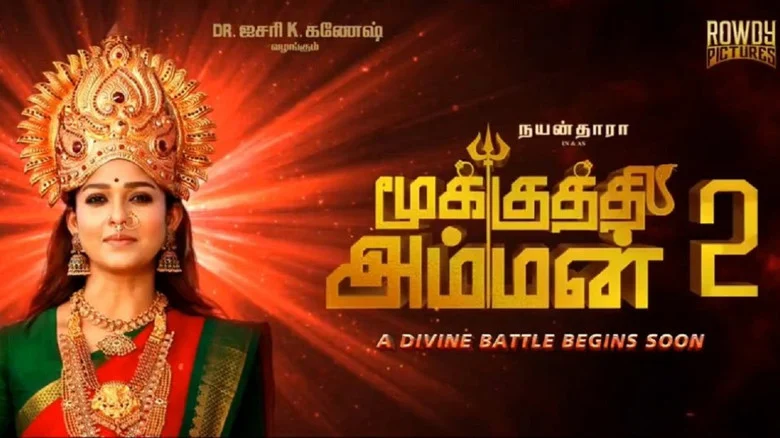
Nayanthara carries both halves, and the contrast is the film’s clearest asset. Her goddess arrives with vertical stillness and a voice pitched low enough to make a police station feel like a chapel, while her constable shrinks into doorframes and flinches at her own shadow.
The physical grammar separating the two performances is precise, even when the screenplay around them is not.
The Antagonist Problem: A Dark Force Without A Demand
Regina Cassandra is cast as the principal supernatural threat, and her entrance carries real menace in the shoulders and the unblinking stare. The trouble is that the film never gives her a coherent objective beyond being the opposite of the goddess.
Villainy built on aesthetic darkness rather than specific want drains the middle act of stakes. She does not negotiate, does not scheme, does not force the heroine into a moral corner. She simply looms, and looming is not a plot.
The screenplay’s answer to this vacuum is escalation by addition. The trailer’s closing cliffhanger hints at three further divine entities entering the fray, and in the finished film this reads less like mythic expansion and more like a franchise hedging its bets mid-battle.
Just as the scale of Furiosa demanded a disciplined center to justify its sprawl, this film needed one goddess’s dilemma to anchor the chaos. It rarely finds it.
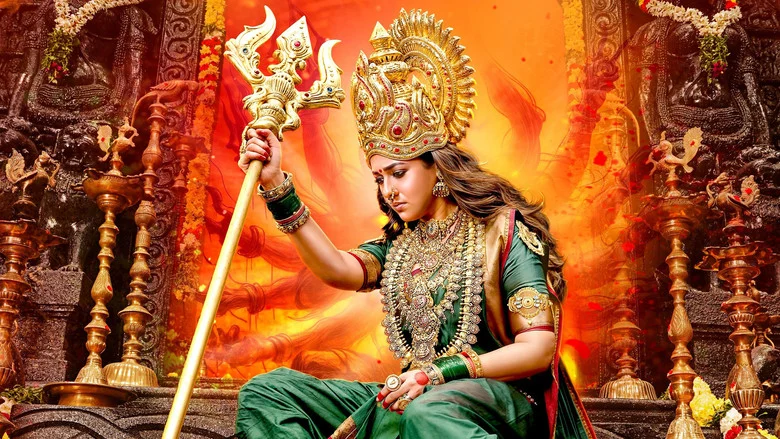
Nayanthara’s Dual Register Holds The Frame Together
Watch her in the transition scenes. The goddess’s chin lifts a fraction before she speaks, a habit of authority rehearsed across centuries, while the constable’s hands never stop fidgeting with her uniform buttons.
That kind of granular physical differentiation is what keeps the film watchable when the plotting stalls. The restrained exhaustion she brings to the identity-reveal sequence recalls the psychological weight of her turn in Toxic, where a similar dual-role architecture buckled under its own ambition.
The supporting ensemble, meanwhile, is largely decorative. Urvashi gets a handful of comic beats that land on timing alone, and Yogi Babu is deployed as pressure-release valve rather than character. The temple elders and royal relatives fill the frame without ever shaping the outcome.
Sundar C’s Tonal Juggle: Devotion, Comedy, And A Police Procedural That Never Commits
Gopi Amarnath’s camera does distinguish the timelines cleanly, bathing the period world in amber firelight and the present in the flat fluorescence of government buildings. The visual contrast is legible without being elegant.
Where the direction falters is in the transitions. The film lurches from a devotional confrontation to a comic aside to a police investigation without the connective tissue that would make the shifts feel earned.
Hiphop Tamizha’s score strains to bridge these registers, swelling into devotional grandeur one moment and retreating into comic bounce the next, and the whiplash is audible.
The first half’s pacing risk is exposition, and the film does not dodge it. The second half compresses the identity reveal, the divine battle, and the tease of additional deities into a denser escalation that never quite breathes.
The screenplay resists the kinetic sensationalism that overtook Ramayana, opting instead for a deliberate mythological register, but deliberation without dramatic friction curdles into inertia. The genre sibling comparison is instructive: both films mistake scale for stakes.
The Box-Office Calculus Behind A Diwali Deity
Avni Cinemax, Rowdy Pictures, and Vels Film International are betting on the Diwali corridor and Nayanthara’s devotional-fantasy brand recognition, a wager that makes commercial sense on paper. The reported advance bookings of ₹4.27 crore across six show dates, reduced to ₹3.34 crore excluding blocked seats, suggest a respectable opening rather than a phenomenon.
The larger question is franchise sustainability. The 2020 original worked because its single-timeline structure kept the goddess-versus-cynicism conflict sharp; this sequel’s expanded mythology dilutes that clarity in exchange for scale it cannot fully control.
Nayanthara’s theatrical leverage remains formidable, but the regional devotional-fantasy pipeline is showing signs of fatigue as every entry tries to build a cinematic universe before earning its first standalone victory.
This patient character study signals a welcome tonal maturity across contemporary tamil fantasys, yet the film’s commercial fate will hinge on whether audiences reward ambition over coherence.
A Cliffhanger That Promises More Than The Film Delivers
The climax stages the divine confrontation with genuine visual conviction, and the final beat’s suggestion of additional divine forces is a confident franchise flex. But a cliffhanger only works when the preceding film has earned the audience’s investment in what comes next.
What lingers is not the teased pantheon but the quieter image of a frightened woman discovering she was never ordinary. That is the film Sundar C almost made, and the one Nayanthara’s dual performance keeps threatening to become.
The sequel’s real sacrifice is not the queen’s, but the clarity of a single goddess with a single battle to win.

Ankit Jaiswal is the Chief Author, covering Indian cinema and OTT releases with honest, no-filler criticism. An SEO strategist by background, he brings a research-driven approach to film writing, cutting through hype to tell you exactly what's worth your time.
Related Movies & Releases