The Good Daughter Finale: Showrunner Karin Slaughter on Sam and Charlie’s Twists

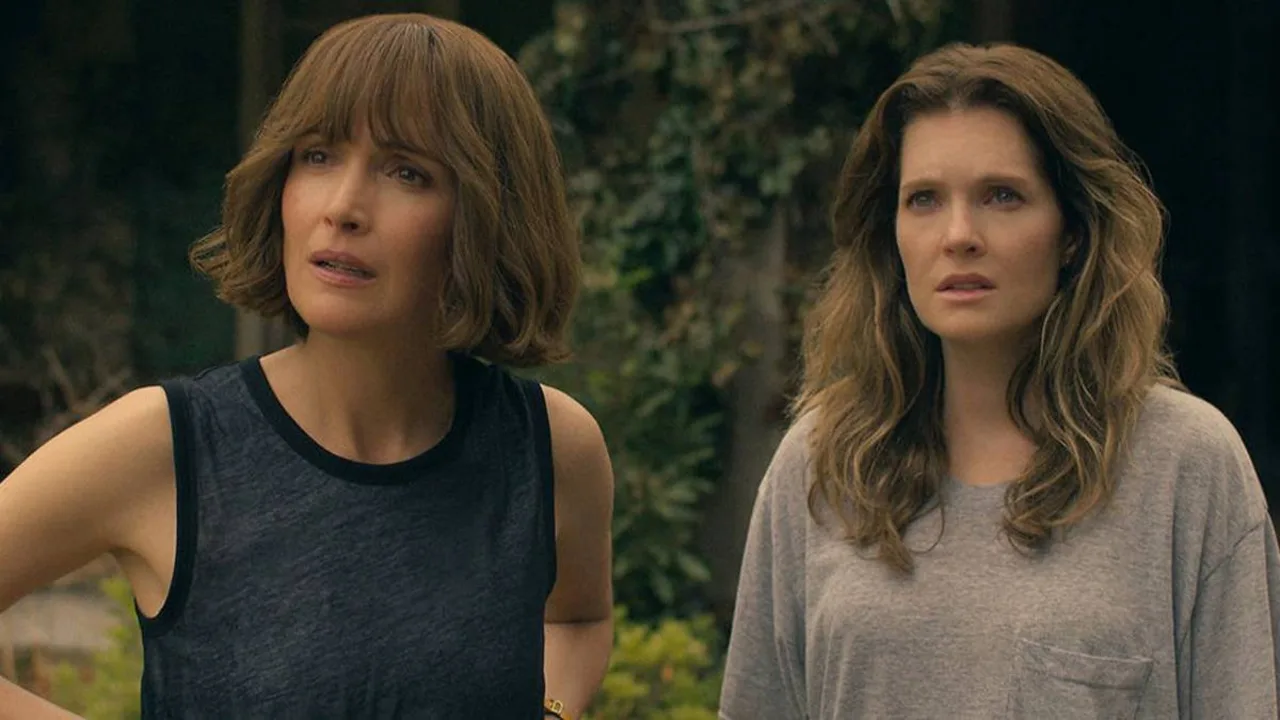
- The Scoop: Peacock’s six-episode limited series The Good Daughter wrapped its run with the finale “What Really Happened,” closing the loop on the Quinn family’s central crimes.
- Location & Production Scale: The production shot on location across Atlanta, Marietta and Griffin, Georgia, with Steph Green directing all six episodes.
- Industry Stakes: Karin Slaughter adapted her own 2017 bestseller and wrote every episode, marking her television showrunning debut alongside Rose Byrne and Meghann Fahy.
Peacock closed out The Good Daughter with a finale titled “What Really Happened,” resolving the double-murder case and the two-decade wound that split sisters Sam and Charlie Quinn.
The six-episode limited series premiered November 12, 2026, adapted by Karin Slaughter from her own 2017 crime novel.
Two Sisters, One Confession: Inside the Finale’s Emotional Payoff
The finale’s structural gamble is that it withholds the sisters’ reconciliation until the last possible beat. Charlie finally tells Sam what Zach did to her in the woods, and the revelation reframes the entire season’s silence.
Rose Byrne plays Samantha as a woman who built a legal career out of controlled distance, while Meghann Fahy’s Charlotte carries the family’s rawest nerve endings. The casting works because the two performers never compete for the scene.
“But I think doing that with Rose in such a quiet space, and Steph Green, our director, who did every single episode, which is so insane and so hard, and she did such an incredible job, she really gave us the space, and the set was really well run and it was very respectful and responsible.”, Meghann Fahy
Brendan Gleeson’s Rusty Quinn gets the season’s most uncomfortable reframing: his failures as a father are recast as a clumsy, desperate shield built around his daughters. Olivia Williams’ Harriet anchors the other side of that inheritance.
By the closing scenes, Charlie and Ben appear to be reconciling and weighing a fresh start in Atlanta, a quiet forward-looking note rather than a tidy bow.
Georgia Over Canada: Why Slaughter Fought for the Novel’s Real Ground
Slaughter pushed to shoot in the book’s actual setting rather than relocate to Canada, and the production planted itself in and around Atlanta, Marietta and Griffin. That decision carries real line-production weight: local crews, practical small-town exteriors, and the humid Southern light the story depends on.
Steph Green directed all six episodes, an unusual continuity of vision for a limited series and a deliberate hedge against tonal drift. Her sustained hand keeps the dual timelines from feeling like two different shows stitched together.
That single-director model also compresses the schedule, since Green carried the visual grammar across every installment without a mid-run handoff. For a crime drama built on slow-burn dread, that consistency is the whole ballgame.
Slaughter writing every episode herself is the other structural bet, and it is a rare one for a novelist making a television debut. It keeps the adaptation’s reveals landing on the page exactly as she designed them.
Peacock’s Fall Bet and the Case for the Closed-Ended Limited Series
The November 12 launch slots into the broader U.S. fall streaming corridor rather than a holiday tentpole window, giving Peacock a prestige crime title to carry subscriber attention through the season.
Executive producers Rose Byrne, Bruna Papandrea, Steve Hutensky and Casey Haver round out a packaging that leans on proven literary IP and a marquee lead rather than franchise scaffolding. It is a self-contained story, tracked across our trade entertainment wire desk, with no sequel obligations hanging over it.
That closed-ended format is the commercial pitch: a six-episode commitment asks far less of a viewer than a multi-season mystery, and it converts curiosity into completion. For a platform chasing retention, a finite series that actually ends is a cleaner acquisition funnel than an open-ended thriller.
The finale’s healing arc lands as a deliberate contrast to the ambiguity favored by contemporary genre experiments that leave audiences hanging. Slaughter’s ending commits to resolution, and that commitment is the show’s real commercial signature.
The economics are straightforward: a Georgia-shot, single-director, six-episode order keeps the budget contained while a name novelist and a two-lead female cast deliver the marketing hook. Peacock gets a finished, rewatchable asset rather than an unfinished franchise bet.

Ankit Jaiswal is the Chief Author, covering Indian cinema and OTT releases with honest, no-filler criticism. An SEO strategist by background, he brings a research-driven approach to film writing, cutting through hype to tell you exactly what's worth your time.
Related Movies & Releases