Disco (2026): Antony Varghese and a Stalled Hustle That Never Finds Its Pulse

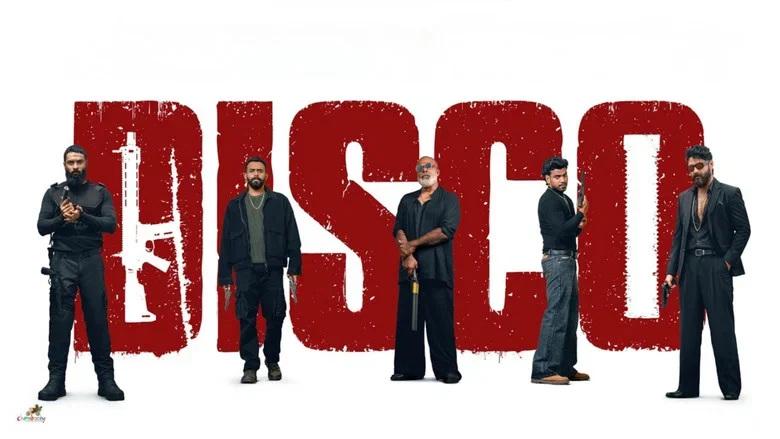
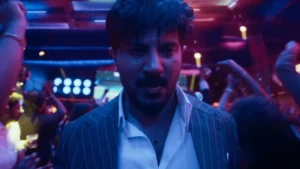
Ullas Chemban opens on a retro-coded street corner where a quick score feels within reach, and for a while the film hums with the loose energy of friends who believe money is a matter of nerve.
Then the scheme curdles, the underground swallows them, and a two-hour-thirty-eight-minute crime thriller starts looking for a pulse it left behind in the first act.
When A Retro Hustle Becomes A Waiting Game
Ousu and his crew are introduced as pleasure-seekers chasing easy cash, a premise that promises the jittery camaraderie of small-time crooks punching above their weight.
The early passages lean on group banter and the retro backdrop, letting the audience settle into a world where the next bad decision is only a conversation away.
That promise of a big score is the film’s first real dramatic ignition, and it arrives with enough swagger to suggest the screenplay knows exactly where the trapdoor is.
What follows, though, is an escalation into an underworld mystery that keeps announcing danger without letting us feel its weight on the characters’ skin.
The Betrayal Engine Runs On Repetition, Not Dread
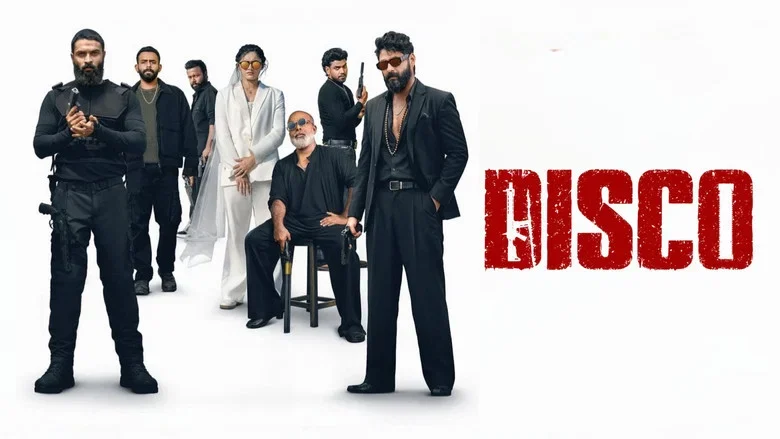
Once the plan collapses, the film pivots to revenge, betrayal, and survival, a tonal shift that should tighten the screws on every friendship in the frame.
Instead, the middle stretch treats each new criminal complication as a fresh set piece rather than a deepening wound, so the stakes multiply while the emotional cost stays flat.
The screenplay’s central mechanic, ordinary people improvising their way out of escalating trouble, is a sturdy engine for a crime thriller, and it occasionally sparks when panic forces the group into ugly choices.
Too often, though, the film mistakes movement for momentum, and the underground mystery remains a vague threat rather than a named, breathing antagonist.
That absence of a defined villain is the film’s most damaging structural gap, because a hustle story needs a face on the other side of the table to make the survival math hurt.
Without one, the second half becomes a series of evasions rather than confrontations, and the ensemble’s fear never finds a target to push against.
Antony Varghese Carries The Weight The Script Won’t Share
Antony Varghese anchors the film with a physical restlessness that suits a man whose confidence is always slightly ahead of his luck.
Watch how he holds his shoulders in the early group scenes, loose, cocky, never quite still, and then how that same posture stiffens once the money turns dangerous.
His best moments arrive in the quieter beats, when the bravado drains from his face and he simply looks like a man recalculating how much trouble he is actually in.
The raw, cornered physicality he brought to the survival beats of I'm Game resurfaces here, though the screenplay gives him fewer corners to fight out of.
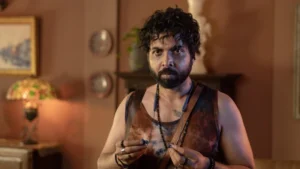
Arjun Ashokan and Lukman Avaran fill the ensemble with recognizable group chemistry, but the film rarely gives them a scene that isolates one of them long enough to register as a distinct person rather than a familiar face in the pack.
Chemban Vinod Jose brings an easy authority to his passages, and the film is noticeably more grounded whenever his presence settles the frame.
Retro Texture Without A Nervous System
Armo’s camera dresses the film in a buzzing retro backdrop, and the period-coded production design gives the early hustle scenes a lived-in, scuffed-around texture.
But the visual scheme rarely shifts register when the story does, so the criminal escalation looks almost identical to the comic opening, same warm palette, same relaxed framing.
Manikandan Ayyappa’s score has the right instinct for separating the group’s carefree passages from the darker underworld sections, though it leans on familiar thriller cues when the tension needs to be earned rather than announced.
The editing is the real culprit in the back half, where the film’s two-hour-thirty-eight-minute length starts to feel like a negotiation between the crime plot and the comedy it can’t quite abandon.
Compare this to the tighter tonal control on display in The Remarried Empress, a peer release that understands how a shift in register can be dramatized through pace and framing rather than dialogue.
Here, the transition from comedy to crime is mostly verbal, and the camera keeps waiting for the actors to do the work the staging should be doing.
A Familiar Descent Next To Sharper Genre Siblings
The film’s central idea, that easy money turns ordinary people into participants in escalating violence, is a durable one, and the ensemble structure gives it room to breathe across multiple perspectives.
What it lacks is the suffocating, deliberate dread that a thriller like Unmadham used to make its uneven stretches feel purposeful rather than accidental.
Where that film let silence and stillness manufacture pressure, Disco fills its tension gaps with banter, and the result is a thriller that keeps clearing its own throat instead of speaking.
The retro styling, the ensemble camaraderie, and the promise of a big score are all legitimate hooks for viewers who want a crime thriller with comic edges.
But the tonal balance between comedy, mystery, and survival is the film’s unresolved argument with itself, and the audience is left to referee a fight the screenplay never finishes.
This patient, character-first approach to crime storytelling is part of a broader shift across contemporary Malayalam thrillers, where ensemble texture increasingly matters as much as plot mechanics.
What Chembosky Motion Pictures Is Actually Betting On
Chembosky Motion Pictures is staking its slate on the Antony Varghese ensemble model, a star with proven draw among younger audiences, surrounded by a deep bench of recognizable Malayalam performers.
That casting strategy is commercially sound on paper, because the film’s opening weekend will be driven by the lead’s fan base and the promise of a group-driven crime caper.
The A certificate narrows the family audience, which puts the entire commercial burden on the young-adult thriller crowd and the star’s core following.
For the franchise lifecycle, the film sits at a tricky intersection: it wants the swagger of a mass action vehicle and the texture of an ensemble crime drama, and it hasn’t fully committed to either.
Antony Varghese’s theatrical leverage is real, but the film’s extended runtime and uneven back half will test how much of that goodwill converts into repeat viewing.
In a market where the regional thriller pipeline is crowded, a two-hour-thirty-eight-minute crime film needs a sharper hook than a vague underground mystery to hold its screens past week one.
The Hustle Ends, The Question Lingers
By the final stretch, Disco has asked its characters to trade profit for survival, and the film’s closing movement leans into the grim arithmetic of people who have run out of clever exits.
That shift is the most interesting thing the screenplay attempts, because it reframes the entire hustle as a slow-motion self-destruction rather than a caper.
The problem is that the film never quite earns the weight of that reframing, because the underworld it fears was never given a face, a voice, or a reason to be feared.
What remains is a stylish, fitfully engaging ensemble piece that mistakes a retro backdrop and a busy plot for atmosphere and consequence.
Disco wants to be a cautionary tale about the price of easy money, but it ends up being a cautionary tale about what happens when a thriller forgets that dread needs a destination.

Ankit Jaiswal is the Chief Author, covering Indian cinema and OTT releases with honest, no-filler criticism. An SEO strategist by background, he brings a research-driven approach to film writing, cutting through hype to tell you exactly what's worth your time.
Related Movies & Releases