Sanjeev (2026): A Quiet Character Study That Trusts Its Silence

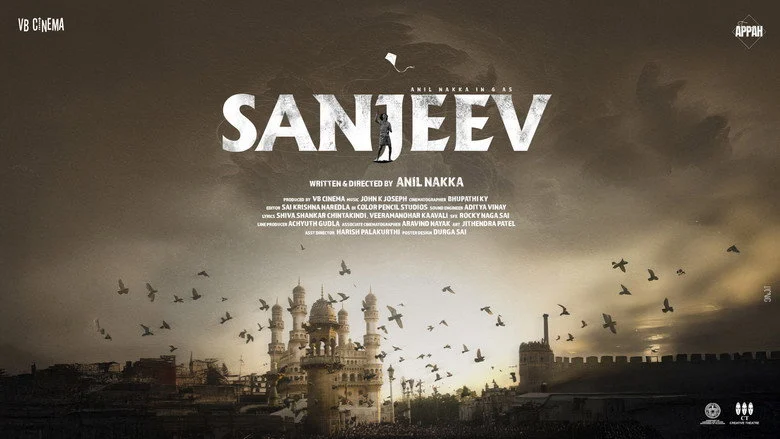
Anil Nakka’s Sanjeev opens not with a bang but with the weight of a man carrying his own name like a burden. The film, built around Nakka’s own performance as the titular character, is a stripped-down drama that leans heavily on the unspoken, a gamble that pays off in fits and starts, though not without its frustrations.
This is a film for viewers who find drama in the spaces between dialogue, not in the explosions of conflict. The question is whether its restraint reads as confidence or as a lack of directorial nerve.
Anil Nakka’s Double Duty: Actor and Director in a Delicate Balance
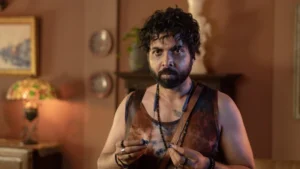
Nakka the actor gives his character a lived-in physicality; there is a heaviness in his shoulders that suggests a man at odds with his own story. He understands that Sanjeev’s tragedy is not in what happens to him, but in how he absorbs it.
As a director, however, Nakka shows a tendency to let scenes breathe a little too long, mistaking duration for depth. His dual role means the film never loses its central anchor, but it also means there is no one to challenge his instincts on the edit floor.
Screenplay Structure: A Slow Burn That Occasionally Stalls
The screenplay trusts its audience to piece together Sanjeev’s past through gestures and half-finished sentences, which is admirable in an era of over-explanation. But this confidence wavers in the middle stretch, where the narrative treads water instead of moving forward.
The film’s strength is its refusal to spell out its themes; its weakness is that it sometimes confuses ambiguity with obscurity. A sharper edit could have tightened the runtime without losing the meditative quality that defines the film’s identity.
Genre Execution: The Drama of Everyday Resistance
As a character-driven drama, Sanjeev operates on the currency of small moments. The film’s best sequences are the quiet ones, a shared glance, a meal eaten in silence, a door left ajar, where the camera simply observes without judgment. It is in these moments that the film’s emotional logic becomes clear, and the audience is invited to lean in rather than sit back.
The pacing is deliberately unhurried, almost documentary-like in its patience. Yet this approach cuts both ways; for every scene that lands with quiet power, there is another that feels undernourished, as if the director is waiting for a payoff that never quite arrives. The film’s climax, when it comes, is understated to the point of being anticlimactic, a choice that will frustrate some and move others.
What the film lacks in conventional narrative propulsion, it attempts to make up for in atmosphere. There is a persistent sense of unease that Nakka sustains through careful framing and a muted color palette, suggesting that the real conflict is internal rather than external. It is a risky strategy that demands patience, and it does not always reward it.
For those who appreciate a more traditional dramatic arc, this approach may test your tolerance. But for viewers who value mood over momentum, there is something quietly compelling here.
If you are drawn to this kind of measured storytelling, you might want to explore more Telugu Drama reviews that operate on a similar wavelength.
Veeramanohar Kavali and the Supporting Cast: Anchors in the Background
Veeramanohar Kavali’s Shiva is a study in contrast to the lead, where Sanjeev is withdrawn, Shiva is restless, and Kavali plays that restlessness with a nervous energy that threatens to spill over. His scenes with Nakka are the film’s most dynamic, offering a glimpse of the conflict the narrative otherwise keeps at arm’s length.
Harish Palakurthi brings a workmanlike reliability to his role, grounding the film’s more abstract tendencies in something recognizably human. Laya Miryala’s Pallavi is given less to do, but she makes her limited screen time count with a quiet dignity. Achyuth Gudla’s Venkat rounds out the ensemble, and the casting signals a deliberate choice to prioritize authenticity over star power, a decision that serves the film’s grounded ambitions well.
Audience Reception and the Politics of Restraint
There is a political dimension to a film that refuses to raise its voice in a cinematic landscape dominated by loud spectacles. Sanjeev‘s commitment to the interior life of an ordinary man is, in itself, a statement about what deserves attention on screen, though it risks being overlooked by audiences conditioned for louder fare.
The film’s reception will likely be divided between those who see its restraint as sophistication and those who read it as a lack of ambition. There is no controversy here, only a quiet bet on the audience’s patience, a bet that may not pay off commercially but has its own integrity.
In a world of instant gratification, this is a film that asks you to sit with discomfort and uncertainty.
For a different take on family dynamics wrapped in silence, TOY GUN review explores similar territory with its own approach.
Sanjeev is a film for those who believe cinema can be a contemplative art form, not just a spectacle. I found myself admiring its discipline more than I was moved by its story. Watch it on a quiet evening, with no distractions, if you want to meet it halfway.
Sanjeev is a patient, honorable piece of work that never quite finds its emotional release, earning a reserved 2.5 out of 5 for its integrity over its impact.
For a sharp contrast in pacing and tone, Modha Rathri verdict shows how a different kind of storytelling energy can engage a viewer.

Ankit Jaiswal is the Chief Author, covering Indian cinema and OTT releases with honest, no-filler criticism. An SEO strategist by background, he brings a research-driven approach to film writing, cutting through hype to tell you exactly what's worth your time.
Related Movies & Releases