A TOY GUN (2026): A Mother-Son Drama That Finds Power in Silence

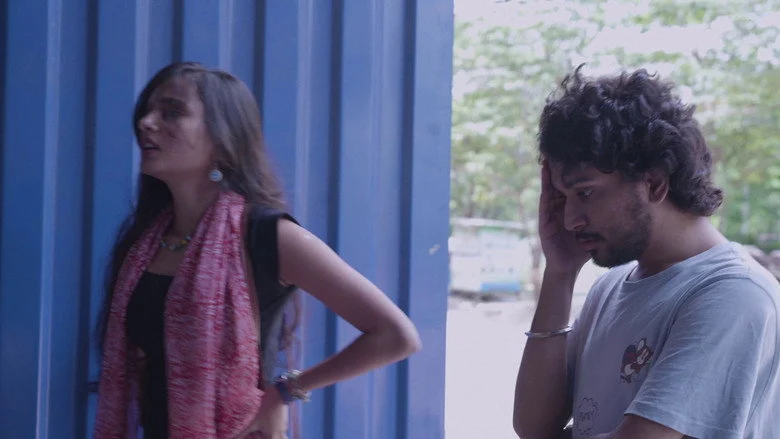
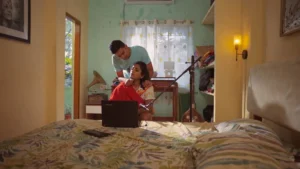
The kitchen feels smaller than it should. A widowed mother moves through her chores while her young son watches, both of them orbiting a silence that has calcified into habit. In Thingnam Parshuram’s 14-minute Meitei short Toy Gun, the violence that shattered this family is never shown, it simply lives in the rooms they occupy, in the way they avoid certain words, in the careful distance between two bodies that should be closer.
This is cinema of aftermath, not event, and it announces its intentions within the first minute: we are not here for spectacle, but for the slow archaeology of grief.
Leishangthem Tonthoi Carries the Weight of Unspoken Grief
Tonthoi’s performance as the widowed mother is the film’s quiet engine. She works in micro-expressions, a pause before answering her son, a hand that lingers on a doorframe, and never once reaches for the theatrical register that would betray the film’s tonal discipline.
Her face is a landscape of controlled devastation. The role demands restraint over revelation, and she delivers exactly that, turning absence into presence through sheer physical economy.
Parshuram’s Direction Chooses Implication Over Exposition
The screenplay is linear and deliberately unadorned, trusting the audience to assemble meaning from what is left unsaid. Parshuram’s strength is his refusal to explain, the trauma exists as texture, not as dialogue.
His weakness, if it can be called one, is that the film’s very restraint occasionally flirts with opacity. Some viewers may wish for a single concrete anchor, one line of context that clarifies what exactly haunts this household.
But that is also the point. The film is not withholding; it is trusting.
The Genre Core: Drama That Breathes in Domestic Realism
As a short-form drama, Toy Gun understands that its canvas is small and its obligations are precise. The household scenes between mother and son carry the emotional center, and the cinematography, intimate framing, minimal movement, mirrors the constriction of their lives.
The middle passages establish a daily rhythm that feels almost documentary in its patience. We watch them eat, work, exist, and within that ordinariness, the memory of violence presses against the frame like weather.
The closing movement shifts from memory to resolution without a single dramatic outburst. It is a finale that trusts the accumulation of small moments, and it lands with surprising weight for a film this brief.
Thingnam Parihanba’s Son Is the Emotional Counterweight
Parihanba, as the young son, functions as the film’s second pole. Where Tonthoi internalizes, he externalizes, his restlessness, his questions, his need for connection all create a push-pull dynamic that keeps the domestic scenes alive.
His casting matters because he is not merely a prop for the mother’s grief; he is a character with his own unspoken fears. The two performances interlock cleanly, creating a portrait of a family that has learned to survive but not yet to heal.
That the film works at all depends on this chemistry, and both actors rise to the challenge of a script that gives them almost nothing to say aloud.
Festival Recognition and the Value of Restraint
With no box office data to speak of, this is a festival-circuit short, not a theatrical release, the film’s currency is recognition, and it has earned its share on that circuit. The audience praise points toward “emotional restraint” and “short runtime with focused narrative, ” which is exactly the right vocabulary for what Parshuram achieves here.
There are no controversies attached to the film, and none are needed. Its political charge is implicit: a Meitei-language film about post-conflict memory carries weight simply by existing, without needing to shout.
This is not a film for viewers seeking action-led conflict or commercial mass entertainment. It is a work for those who understand that the most violent thing about trauma is how quietly it lives inside a home.
If you are looking for more intimate storytelling in regional cinema, browse more Hindi Crime reviews, the festival circuit has been quietly producing gems like this one.
In a landscape of escalating noise, Toy Gun is a reminder that the smallest films often carry the heaviest truths. It is best watched on OTT, alone, with the volume low and your attention undivided.
I found myself thinking about the mother’s hands long after the credits rolled, that is what this film does, it lingers.
Toy Gun is a quiet triumph of emotional intelligence, a film that earns its 14 minutes and then some, a solid 3.5 out of 5, and a must-watch for anyone who believes that less can be infinitely more.
For another take on family dynamics strained by circumstance, see how Modha Rathri review handles its own domestic tension.
And if you are in the mood for regional storytelling that grapples with memory, Ram Leela verdict offers a different but equally revealing lens.

Ankit Jaiswal is the Chief Author, covering Indian cinema and OTT releases with honest, no-filler criticism. An SEO strategist by background, he brings a research-driven approach to film writing, cutting through hype to tell you exactly what's worth your time.
Related Movies & Releases