Aryabhatt Ka Zero (2026): A Familiar Underdog Story That Rests on Himansh Kohli’s Shoulders

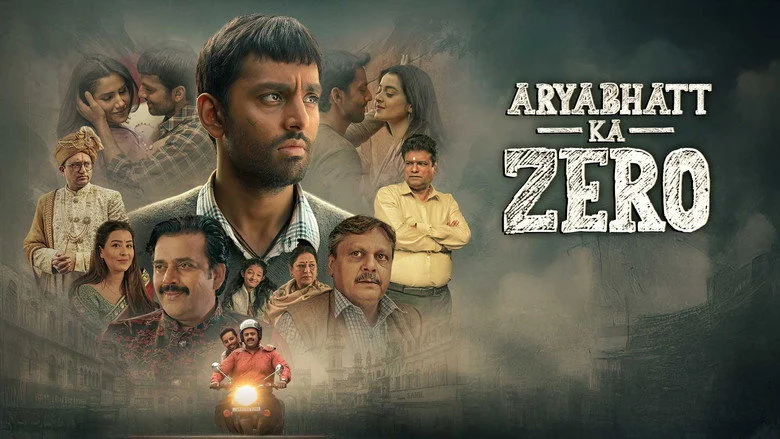
Baggu stands in the shadow of his father’s disappointment, a young man reduced to a number that means nothing, a zero in a world that only counts winners. From that opening dismissal, Kamal Chandra’s Aryabhatt Ka Zero charts a predictable but emotionally grounded path toward self-belief, anchored by Himansh Kohli’s earnest turn as the struggling protagonist.
Himansh Kohli Carries the Film’s Emotional Weight With Quiet Conviction
Kohli is the film’s beating heart, tasked with playing frustration, embarrassment, and the slow bloom of confidence. His strongest moments arrive in the family-conflict scenes, where his body language shrinks under his father’s harsh gaze before gradually straightening as the narrative progresses.
The actor never overplays the transformation, which keeps the character believable even when the screenplay around him falters. It is a performance of small gestures and restrained reactions, and it works.
Neeraj Sood’s Father Figure Creates the Drama’s Sharpest Edge
As Aryabhatt Srivastava, Neeraj Sood provides the primary source of tension, his disappointment in Baggu shaping the film’s central conflict. Their exchanges carry a lived-in quality that elevates the material beyond its familiar underdog structure.
Sood’s rigidity makes the eventual emotional thaw meaningful, even if the film arrives there through well-worn paths. The father-son dynamic is the one element that feels genuinely earned.
The Genre-Core Execution: A Drama That Prioritizes Transformation Over Surprise
Aryabhatt Ka Zero is built on emotional conflict rather than plot complexity, with the underdog structure revolving around self-doubt and external judgment. The film’s small-town Uttarakhand setting adds a layer of social authenticity, grounding Baggu’s struggle in a recognizable world of community scrutiny and familial expectation.
The screenplay leans heavily on familiar motivational beats associated with slice-of-life drama, which makes the first half more effective than the second. The setup, Baggu being repeatedly dismissed as a failure before deciding to pursue UPSC, lands with clarity, but the middle section stretches those beats thin.
Hindustan Times called it “a two-hour long trip to nowhere, ” a harsh but not entirely unfair assessment of the pacing issues that plague the second half. The film’s compact 114-minute runtime helps, but the repetitive emotional beats test patience before the climax arrives at its predictable redemption.
For more coverage of similar heartfelt storytelling, browse more Hindi Drama reviews on our site.
Supporting Cast Adds Texture to a Thin Social Canvas
Ravi Kishan brings his usual commanding presence to Chhannu Bhaiya, anchoring the film’s social world with the weight of a performer who understands small-town dynamics instinctively. His scenes provide a secondary layer of conflict that keeps the narrative from becoming a two-hander.
Sonnalli Seygall’s Rinku serves as the romantic counterpoint, though her role remains underdeveloped in the available material. Darshana Banik’s Bobby expands the interpersonal dynamics within the film’s social setting, functioning more as atmosphere than character, a reflection of the screenplay’s limited ambitions for its women.
The Familiarity Problem: An Inspirational Arc Without Freshness
The film’s core premise, a failed young man attempting UPSC, is relatable, but the execution lacks the freshness needed to distinguish it from countless other aspirational dramas. Times of India noted that “Himansh Kohli anchors this warm…” narrative, and that warmth is real, but it cannot compensate for a screenplay that repeats its motivational beats without variation.
There is no conventional villain here; the antagonist is social pressure and family judgment, which is a mature choice. But the film’s refusal to complicate its central conflict leaves it feeling safe rather than daring, a drama that checks boxes instead of breaking them.
At 2.0/5 from Hindustan Times, the critical consensus reflects a film that means well but executes its vision unevenly. The audience response mirrors this split, praise for Kohli’s performance and the father-son conflict, complaints about pacing and predictability.
For a more focused exploration of a similar underdog dynamic, consider how Tadviruddha review with sharper dramatic stakes.
Aryabhatt Ka Zero is for viewers who value emotional sincerity over narrative invention, who will forgive a stretched second half for a genuinely warm father-son arc. If you need your dramas to surprise you, this one will frustrate. But if you can settle into its familiar rhythms, Kohli’s earnestness carries it further than the screenplay deserves. Watch it for the performances, not the plotting.
Aryabhatt Ka Zero earns a modest 2.5/5, a well-intentioned drama that Kohli’s performance lifts from forgettable to watchable, but one that never escapes its own predictability.
For another slow-burn Hindi drama with an uneven payoff, Newton s verdict offers a similar study in narrative patience.

Ankit Jaiswal is the Chief Author, covering Indian cinema and OTT releases with honest, no-filler criticism. An SEO strategist by background, he brings a research-driven approach to film writing, cutting through hype to tell you exactly what's worth your time.
Related Movies & Releases