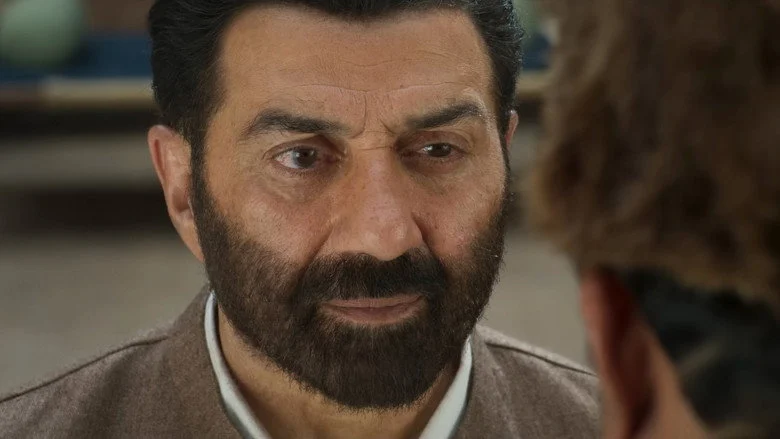

Detective Teekshanaa (2026): Priyanka Upendra Anchors A Solid But Familiar Kannada Crime Thriller
The trailer opens on a murder so gruesome it announces the film’s intentions within seconds, this is a world where violence against women leaves families shattered and the legal system turns a blind eye. Enter Priyanka Upendra’s Teekshanaa, a detective whose intelligence is framed as the only weapon capable of cutting through the rot.
For a Kannada crime thriller arriving with pan-India ambitions, this is a promising setup that trades in familiar procedural currency but banks heavily on its female-led premise to stand apart.
Priyanka Upendra Carries A Procedural Burden
Upendra is the engine here, and the role demands a performance built on observation rather than outbursts. Coverage consistently highlights her detective using “unique techniques, methods, and strategies” rather than brute force, which suits her composed screen presence.
The film’s tagline, “Every husband has detective wife”, signals the playful confidence she brings to the part. But the real test lies in whether her restraint holds across a 121-minute runtime where the mystery must sustain momentum.

Trivikram Raghu’s Direction Favors Structure Over Flash
Raghu’s screenplay follows a largely linear investigation path, which is a strength for genre clarity but a risk for dramatic variety. The director reportedly spent 180 days in the editing room and approved the 17th version, a stat that suggests obsessive fine-tuning, though it raises questions about first-draft instincts.
The weakness is visible in the absence of a confirmed villain identity or a memorable set-piece in pre-release materials. I wanted more texture from the supporting characters, who remain names on a call sheet rather than presences in the frame.
The Genre Core: A Crime Thriller Built On Consequence
The initiating crime event, a murder sequence that leaves women relatives bearing the consequences, is the film’s most potent idea. It grounds the thriller in a social-investigation layer where the detective’s job is not just to find a killer but to expose systemic failure. This gives the procedural beats a moral weight that pure whodunits often lack.
Teekshanaa’s entry into the investigation is framed as a strategic intervention rather than a personal vendetta. The synopsis emphasizes her connecting multiple killings into a broader pattern of injustice, which suggests a screenplay that respects the audience’s intelligence. The trailer’s tone confirms suspense is built through case progression, not romance or comic relief.
Yet the genre execution carries a familiar risk: without a standout set-piece or a visually distinctive interrogation scene, the film may rely too heavily on plot mechanics. The craft observations available point to a competent thriller, but nothing in the coverage suggests a scene that will be replayed for years.
Supporting Cast: Familiar Faces, Unclear Functions
Avinash, Aruna Balaraj, Robo Ganeshan, and K. S. Sridhar are all listed in the cast by multiple sources, but no performance detail survives in the available coverage. Their casting signals a veteran-heavy ensemble, which typically stabilizes a thriller’s credibility.
Wencita Dias plays the younger Teekshana, a flashback function that hints at an origin-linked performance. Manjunath Hegde and Vijay Suriya round out the roster, but their roles remain unspecified, a gap that makes it hard to assess the film’s dramatic depth beyond its lead.
The Pan-India Push And Its Reception Problem
The film is positioned as a pan-India release, which widens its potential reach but also invites scrutiny from audiences unfamiliar with Kannada thriller conventions. The core premise, a female detective solving murders linked to women’s suffering, is timely and marketable.
However, the absence of verified post-release reviews, critic ratings, or audience scores leaves the film in a strange pre-judgment zone. The pre-release buzz is positive around the premise and Upendra’s casting, but no consensus exists on pacing, resolution, or tonal consistency. That silence is itself a signal; a film this confident in its editing process should have generated more conversation by now.
If you are drawn to procedural mysteries with a social conscience, this is worth a watch for Upendra’s committed lead performance. The 121-minute runtime is lean, and the UA certificate suggests the violence is handled with some restraint. Best experienced in a theater if you want the thriller atmosphere to land.
Detective Teekshanaa earns a solid 3 out of 5, a competent, well-intentioned crime thriller that leans on its lead’s intelligence but doesn’t yet prove it can outsmart the genre’s clichés.
For more Kannada crime thriller reviews, browse our Kannada Thriller reviews.
Those interested in how another Kannada film handles a singular protagonist’s obsession might find G D review a compelling counterpoint.
And for a different take on cultural friction wrapped in genre packaging, Korean Kanakaraju verdict offers a bolder swing.