Trump on ’60 Minutes’ Talks Midterm Loss, Death and Forgiveness

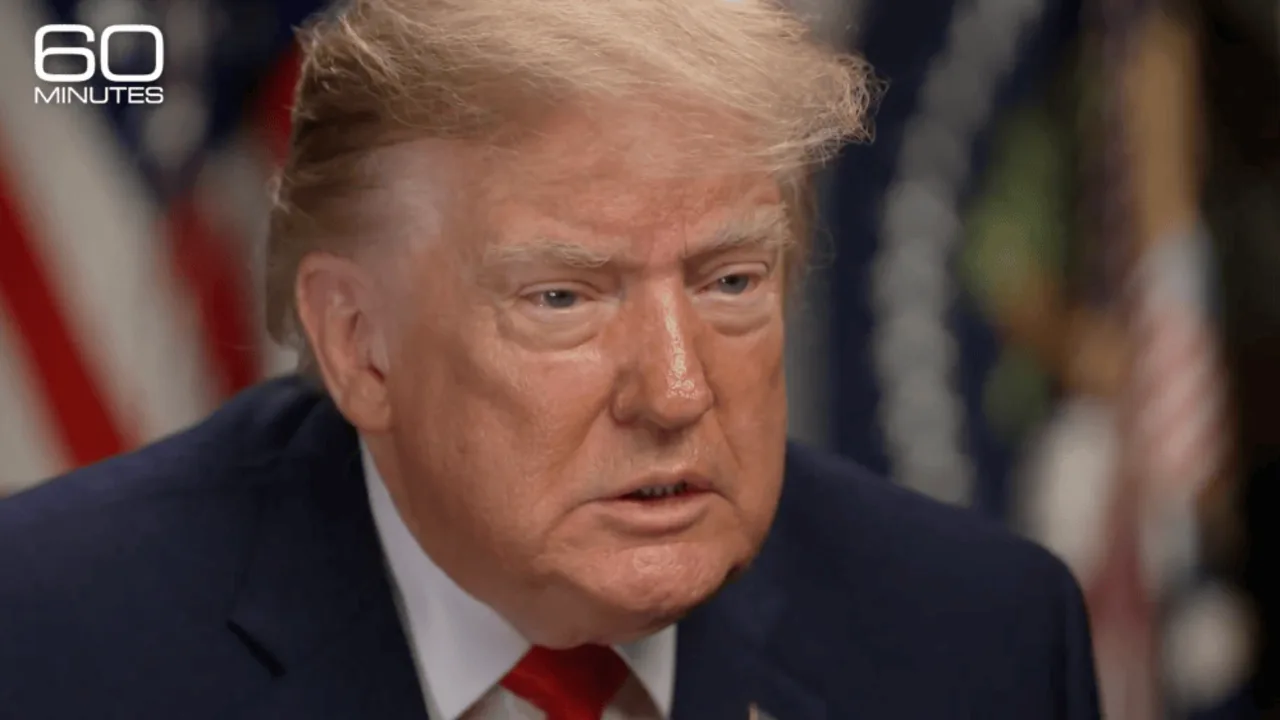
- The Scoop: Donald Trump sat with CBS’s 60 Minutes on Sunday, November 8, 2026, his first major television interview after Republicans lost both congressional chambers.
- Interviewer & Booking: Correspondent Ross Douthat conducted the sit-down, his first with Trump since joining the program’s roster.
- The Headline Exchange: Pressed on whether he could forgive political enemies to enter heaven, Trump answered: “I probably cannot do that, no, because I do hate some of my enemies and I always will.”
- Broadcast Stakes: The taped Friday, aired Sunday scheduling gave CBS the first post-election word from the White House, a booking advantage across the Sunday political circuit.
Donald Trump used his first post-midterm television appearance on CBS’s 60 Minutes to declare he cannot forgive his political enemies, telling correspondent Ross Douthat: “I probably cannot do that, no, because I do hate some of my enemies and I always will.”
The interview, taped Friday morning and broadcast Sunday, November 8, 2026, arrived days after Republicans lost both chambers of Congress and statewide offices in traditionally red states.
A Forgiveness Question That Became the Broadcast’s Defining Exchange
Douthat’s line of questioning turned theological, asking what Trump believed awaited him after death and whether he could extend forgiveness to adversaries to enter heaven. Trump’s reply (“Well, then I wouldn’t be real, would I?”) turned the exchange into the night’s most replayed clip.
He expanded on his religious standing without softening the admission: “Well, I’m a religious person, so in theory, I go to heaven. I hope so. I don’t want to go to hell.”
The answer handed CBS a soundbite engineered for the Monday news cycle, and it landed with the bluntness that has defined Trump’s on-camera appearances across decades of network bookings.
CBS Seizes the First Post-Election Word From the White House
The booking carried real competitive weight. Securing the president’s first sit-down after a sweeping defeat gave CBS the opening frame on the new Congress and the remainder of Trump’s term.
The conversation ranged across the Iran war, immigration, the economy, potential successors, alleged corruption and artificial intelligence, a full-spectrum agenda packed into a single broadcast window.
Douthat’s debut interview with Trump marked a notable entry for the correspondent, whose arrival on the program came with expectations of exactly this kind of philosophical pressure. CBS promoted the hour as the president’s first major television appearance following the losses, positioning the broadcast as appointment viewing rather than routine political coverage.
Why a Newsmagazine Slot Outranks the Sunday Show Circuit
60 Minutes remains one of American television’s highest-rated news programs, and the format’s long-form structure gave the president room to expand on answers the Sunday political shows would have compressed into soundbites.
That structural advantage matters commercially. A newsmagazine hour draws a broader, older-skewing audience than cable panels, and the taped Friday, aired Sunday model lets the network control the edit and the promotional rollout.
The interview’s afterlife will be measured across our trade news desk as clip circulation and follow-up bookings unfold through the week.
For CBS, the win is a scheduling coup that converts a political low point for the White House into a high-visibility broadcast asset, the kind of booking that drives tune-in, fuels affiliate promotion and keeps a legacy newsmagazine central to the national conversation.

Ankit Jaiswal is the Chief Author, covering Indian cinema and OTT releases with honest, no-filler criticism. An SEO strategist by background, he brings a research-driven approach to film writing, cutting through hype to tell you exactly what's worth your time.
Related Movies & Releases