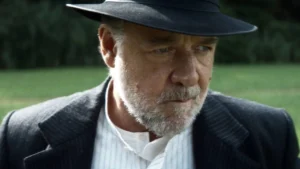
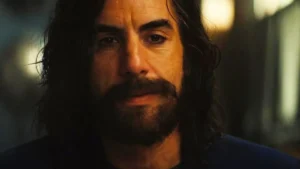
Netflix’s East of Eden Hits 25.3 Million Views in Three Weeks


- The Scoop: Netflix’s seven-episode Steinbeck adaptation East of Eden, created by Zoe Kazan and led by Florence Pugh, has climbed to 25.3 million views three weeks after its October 1, 2026 premiere.
- Ratings Trajectory: The limited series opened with 6.5 million views in its first measurement window, crossed roughly 20 million after two weeks, and kept adding audience into week three.
- Cast Depth: Pugh anchors as Cathy Ames opposite Christopher Abbott, Mike Faist, Ciarán Hinds, Hoon Lee, and Martha Plimpton.
- Genre Benchmark: The haul lands behind Netflix’s 2025 Western American Primeval at 46 million views and the 2026 Little House on the Prairie at 29 million.
Netflix’s East of Eden has converted literary prestige into hard streaming volume, reaching 25.3 million views three weeks after its October 1, 2026 launch. The seven-episode limited series, created by Zoe Kazan from John Steinbeck’s 1952 novel, is now a certified performer on the service’s weekly charts.
Steinbeck Rewired: How Kazan Built a Western Around Cathy Ames
Kazan’s adaptation does not treat the Trask family saga as a museum piece. It pulls Cathy Ames, played by Florence Pugh, into the narrative center and widens the arcs of the Trask brothers and the household figure Lee.
That rebalancing gives the series a gravitational pull the source novel only implies. Pugh’s Cathy becomes the engine of a story that otherwise sprawls across generations and California valley farmland.
The supporting bench is built for weight, not decoration. Christopher Abbott, Mike Faist, Ciarán Hinds, Hoon Lee, and Martha Plimpton give Kazan a cast capable of carrying the novel’s moral collisions without tipping into costume-drama stiffness.
Kazan arrives at this material with her own literary inheritance as Steinbeck’s descendant, a fact that sharpens rather than softens the revisionist instinct here. She is not reverent. She is surgical.
The Ratings Curve: A Slow-Burn Hit Netflix Can Actually Brag About
Opening numbers rarely tell the full story on Netflix, and this one proves the point. East of Eden logged 6.5 million views across its first measurement window, covering September 28 through October 4.
By week two it had pushed toward 20 million. By week three it cleared 25.3 million, a trajectory that signals word-of-mouth retention rather than opening-weekend curiosity.
That curve matters more than the raw total. Titles that hold audience across three weeks give the platform sustained engagement hours, which is the metric that actually justifies the spend on a period literary adaptation.
The competitive set is unforgiving. Netflix’s own 2025 Western American Primeval banked 46 million views, and the 2026 Little House on the Prairie reached 29 million, setting the bar this series is measured against.
Against that backdrop, 25.3 million is a solid mid-tier result with room to grow as the series stays in the recommendation engine. It is not a franchise-launching juggernaut, but it is a credible prestige win.
Why the Western Corridor Is Netflix’s Quiet Profit Center
The October 1 slot places East of Eden in the autumn corridor, a window that rewards slower, character-driven viewing as audiences settle into longer-form habits. Netflix did not tie the launch to a holiday frame, and it did not need to.
The real leverage is catalog. A Steinbeck adaptation with a marquee lead in Pugh becomes a permanent library asset, resurfacing every time a school syllabus or book club cycles back to the novel.
That is the economics of literary IP: the marketing spend front-loads, but the residual value compounds for years. A limited series with a closed ending also avoids the renewal gamble that sinks so many open-ended bets.
Track the week-four hold across our streaming ratings desk. If East of Eden keeps adding views past its third week, Netflix has a template for how to sell a classic novel to a global audience without a single cape or explosion.

Ankit Jaiswal is the Chief Author, covering Indian cinema and OTT releases with honest, no-filler criticism. An SEO strategist by background, he brings a research-driven approach to film writing, cutting through hype to tell you exactly what's worth your time.
Related Movies & Releases