The Paradise (2026): Nani’s Fury Cannot Redeem Srikanth Odela’s Stretched Revenge Saga

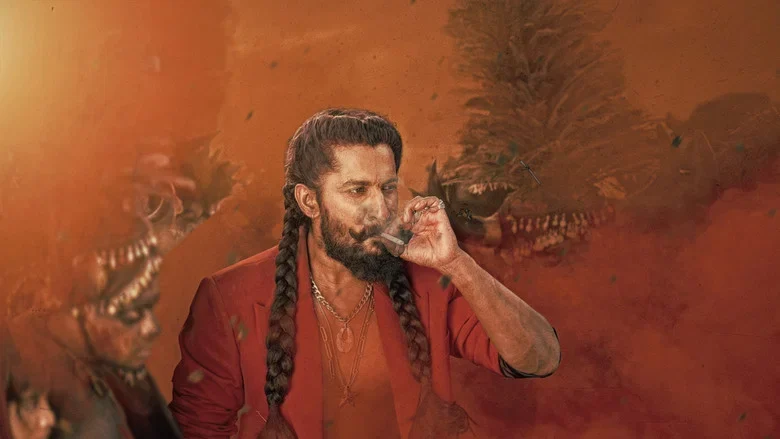
There is a moment in the first act of Srikanth Odela’s The Paradise where a child’s forearm is pinned to a wooden table and branded with an obscenity that will define his entire life. It is a sequence of pure, unfiltered cruelty, and for a fleeting hour, the film believes in the weight of its own horror. Then the second half arrives, and that weight collapses under the familiar, grinding machinery of a Telugu revenge drama that mistakes volume for conviction.
When Oppression Becomes Spectacle, Storytelling Becomes An Afterthought
The film opens in 1980s Secunderabad, inside a settlement called Paradise, where five thousand members of the Savaari community live without citizenship, identity cards, or access to basic medical care. Shikanja Malik (Mohan Babu) controls this population through a hereditary stranglehold, forcing them into illicit liquor production and marking their children with tattoos from birth. It is a system of domination so complete that it renders its victims invisible to the state before they can even speak.
Odela constructs this world with a documentarian’s eye for institutional detail: the absence of paperwork, the routine humiliation at the hands of Malik’s enforcers, the way Sammakka (Sonali Kulkarni) pleads with bureaucrats who refuse to acknowledge her people exist. The screenplay establishes a concrete political economy of exclusion, one that mirrors the social hierarchies explored in contemporary Telugu action cinema that prioritises atmosphere over empty spectacle. For a while, this specificity is the film’s greatest asset.
Then Jadal (Nani) returns from prison after fourteen years, and the film forgets what it was about. The community’s struggle for recognition becomes background noise to a series of confrontations that could have been lifted from any revenge template of the past two decades. The Malik family must be punished, the hero must roar, and the audience must clap. The film’s political thesis, that collective representation matters more than individual vengeance, gets buried under the weight of its own choreography.
A Conman’s Panic In A Kidnapping With No Antagonist
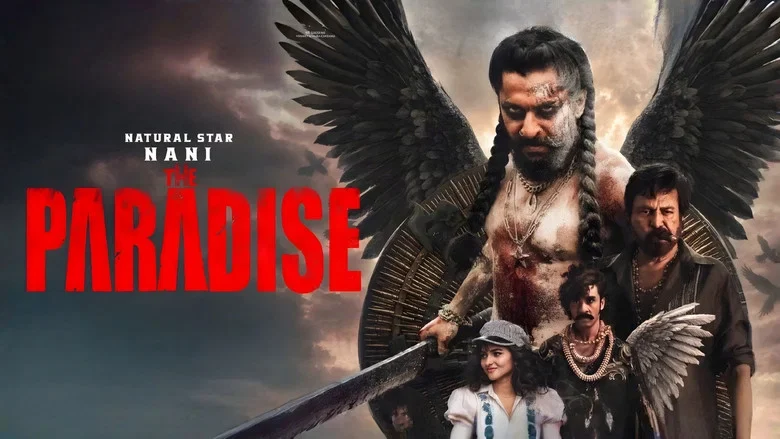
Mohan Babu’s Shikanja Malik is less a character than an administrative function. He does not scheme; he simply exists as the system’s human face, issuing orders from a veranda while others do the bleeding. There is no scene where he reveals a crack in his armour, no moment where his authority feels genuinely threatened. He is a monument to feudal power, and monuments do not make for compelling antagonists.
Raghav Juyal’s Vikram Malik, the son positioning himself for electoral politics, offers a theoretically richer threat: the modernisation of hereditary control through democratic machinery. But the screenplay never allows him to become more than a petulant heir, his ambitions reduced to sneering monologues and the occasional violent outburst. The film’s central conflict, Jadal versus the Malik dynasty, is structurally sound but dramatically inert.
The Stillness That Manufactures Pressure
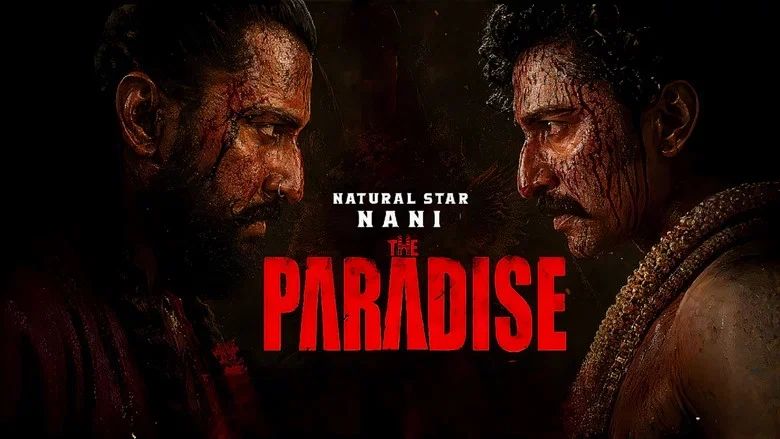
Nani is the reason to endure the film’s indulgences. His Jadal is a study in contained rage, a man who has spent fourteen years learning to swallow his fury and now finds it rising unbidden at the sight of familiar streets. Watch the way he enters his mother’s house for the first time after release: his shoulders are squared, but his hands tremble slightly at his sides. He refuses to meet Sammakka’s eyes, not out of cruelty, but because looking at her would require acknowledging the years he lost.
The actor’s physical discipline recalls the psychological weight he brought to his work in Srinivasa Mangapuram, where he played a man navigating the gap between familial expectation and personal desire. Here, that same internal conflict is externalised through scars and silence. When Jadal finally confronts his mother about her activism, accusing her of caring more about the community than about him, Nani delivers the lines without raising his voice. The accusation lands harder because of its restraint.
Sonali Kulkarni matches him beat for beat. Sammakka is not a martyr figure; she is a woman who made impossible choices and now must live with the consequences. In one scene, she sits alone in a government office, clutching a stack of applications that will never be approved, and the camera holds on her face long enough for us to see the exhaustion beneath her determination. It is the film’s most quietly devastating image.
When A Mastermind Becomes Infallible, Suspense Dies
The second half of The Paradise is where the film loses its nerve. Odela, who demonstrated a tighter spatial discipline in his previous work, strips away the patient world-building of the opening hour and replaces it with extended action passages that feel disconnected from the political stakes. Jadal’s campaign to prevent Vikram’s electoral rise should be a battle of strategy and will; instead, it becomes a series of fistfights and slow-motion walks that prioritise swagger over substance.
The editing compounds the problem. The first half allows scenes to breathe, letting the audience absorb the texture of Paradise and the mechanics of its oppression. The second half cuts rapidly between confrontations, as if afraid that stillness might reveal the hollowness at the film’s core. The action is competently staged but emotionally weightless, because the film has forgotten that violence only matters when we understand what is at stake beyond the immediate blow.
What makes this particularly frustrating is that the tools for a better film are all present. The tattoo motif, children marked before they can consent, Jadal’s forearms bearing the insult that defined his childhood, is a powerful visual metaphor for inherited trauma. The mother-son conflict provides an emotional axis that could sustain the entire narrative. But Odela keeps abandoning these threads in favour of conventional heroics, as though unsure whether he is making a social drama or a mass entertainer.
The Uncomfortable Resolution And The Cost Of Compromise
By the time Jadal shifts from personal revenge to collective resistance, the transformation feels unearned. The film wants us to believe that he has understood Sammakka’s sacrifices and embraced her cause, but it has spent so much time on his individual vendetta that the political awakening arrives as an afterthought. The climax gestures toward a larger struggle without committing to its implications, leaving the audience with the vague sense that something significant was being discussed but never quite said.
This is the central failure of The Paradise: it cannot decide whether it wants to be a film about a community’s fight for identity or a film about a man’s quest for vengeance. The result is a narrative that serves neither fully. The Savaari community remains a backdrop to Jadal’s story rather than its driving force, and the political systems that render them invisible are never confronted with the rigour they demand.
Nani deserves better. He has built a career on choosing roles that demand emotional precision, and Jadal is one of his most physically demanding performances. But even his commitment cannot compensate for a screenplay that loses its way. The film’s final image, Jadal standing at the threshold of a fight that will continue beyond the credits, is meant to be rousing. Instead, it feels like a surrender.
What remains is a film of two halves: one that understands the power of specificity, and one that trades it for the comfort of familiarity. As cinema trackers on Filmy Fly have pointed out across ongoing theatrical debates, The Paradise could have been a reckoning with the ways societies manufacture invisibility. Instead, it becomes another entry in a genre that mistakes volume for meaning, leaving its most potent ideas buried beneath the noise.
Rating: 2.5 / 5
The tattoo on Jadal’s forearm will fade with time, but the film’s failure to fully reckon with what it represents will linger longer.

Ankit Jaiswal is the Chief Author, covering Indian cinema and OTT releases with honest, no-filler criticism. An SEO strategist by background, he brings a research-driven approach to film writing, cutting through hype to tell you exactly what's worth your time.
Related Movies & Releases