Ben Affleck Calls Justice League “Low Point” of His Career

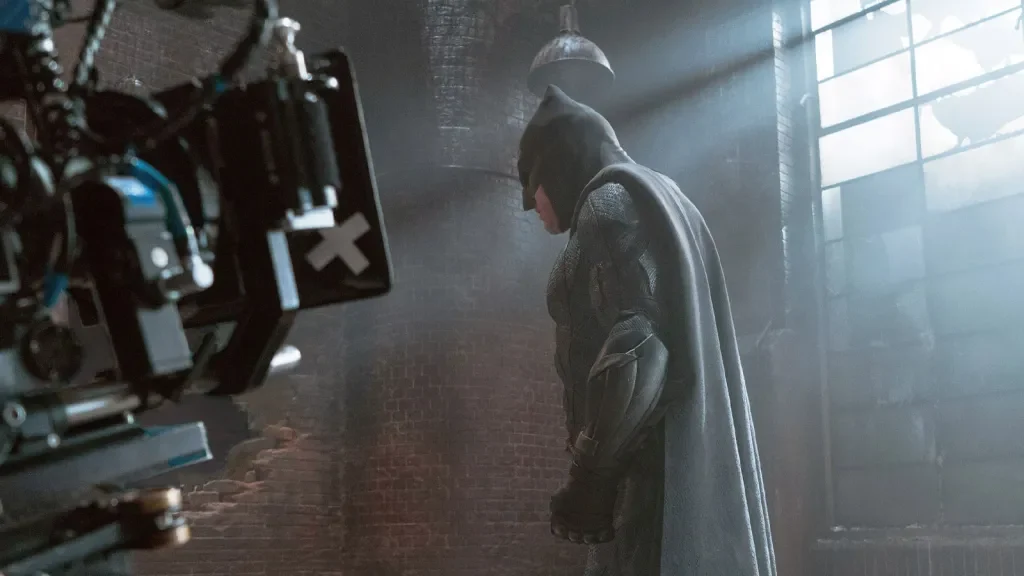
- The Scoop: Ben Affleck has publicly described the production of 2017’s Justice League, specifically the reshoots following Zack Snyder’s departure, as the “low point” and “nadir” of his entire career.
- Production Fallout: Affleck detailed a toxic environment on set, citing Snyder’s removal after a family tragedy and Joss Whedon’s extensive overhaul as the breaking point that made him walk away from the Batman role.
- Industry Stakes: The frank admission underscores the commercial and creative damage of a $300 million tentpole that grossed $661.3 million worldwide and reportedly lost Warner Bros. an estimated $60 million.
Ben Affleck has described the production of 2017’s Justice League as the “low point” of his career, delivering a blistering retrospective on the reshoots that followed Zack Snyder’s exit from the DC tentpole. The actor’s remarks, made during an appearance on the Happy Sad Confused podcast, pull back the curtain on one of the most turbulent studio productions of the modern franchise era.
Affleck’s assessment arrives nearly eight years after the film’s November 17, 2017, theatrical debut, and it reframes the blockbuster not as a creative misfire but as a systemic breakdown. The actor did not mince words, directly tying his disillusionment to the departure of Snyder and the subsequent overhaul by Joss Whedon.
“If you want the low point of my career, it was that,” Affleck said. “Boy, that was shitty, him being taken off that movie and the reshoots that we did.”
The Reshoots That Broke a Franchise’s Back
Snyder stepped away from the project during production following the death of his daughter, Autumn, and Whedon was brought in to oversee extensive reshoots and complete the theatrical version. Affleck characterized the resulting environment as corrosive, pointing to the experiences of co-stars Ray Fisher and Gal Gadot as evidence of a broader systemic failure.
“The whole environment and vibe, much of which I wasn’t privy to, but that I sort of heard about secondhand in terms of Ray and Gal and other people’s experiences, it was just like, ‘Wow, this is about as gross as it gets,'” Affleck said. The actor’s account aligns with Fisher’s long-standing public criticism of Whedon’s conduct during the reshoots, a controversy that continues to shadow the DC brand.
Affleck has previously described the experience as the “nadir” of his professional life, telling the Los Angeles Times that the ordeal was “awful” and represented “everything that I didn’t like about this.” He added: “That became the moment where I said, ‘I’m not doing this anymore.'” The comments mark one of the most candid postmortems ever offered by a marquee star on a major studio franchise.
A $300 Million Lesson in Studio Miscalculation
The commercial math behind Justice League remains brutal. Produced at a reported cost of approximately $300 million, the film grossed just $661.3 million worldwide, well below the estimated $750 million break-even threshold. Deadline reported an estimated studio loss of approximately $60 million, a figure that crystallized the risks of stacking a franchise on an unstable production foundation.
The film’s pre-Thanksgiving release corridor, opening one week before the U.S. holiday, was designed to capture the extended seasonal marketplace. Instead, the theatrical cut’s reception and the ensuing Snyder Cut campaign exposed a fractured audience base and a studio grappling with competing creative agendas. Affleck has since expressed gratification that Snyder ultimately secured the release of his own version, a director’s cut that reframed the conversation around the original theatrical release.
The episode remains a case study in franchise volatility, monitored across our theatrical release tracking as a cautionary tale for studios balancing auteur vision against corporate mandates. For Affleck, the experience marked a definitive break from the cape-and-cowl machinery, one he has not revisited since.
With the DC Universe now under new stewardship at Warner Bros. Discovery, the financial and reputational wreckage of Justice League stands as the definitive argument for why the studio’s old guard lost its grip on the genre’s most valuable intellectual property.

Ankit Jaiswal is the Chief Author, covering Indian cinema and OTT releases with honest, no-filler criticism. An SEO strategist by background, he brings a research-driven approach to film writing, cutting through hype to tell you exactly what's worth your time.
Related Movies & Releases