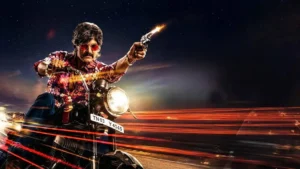
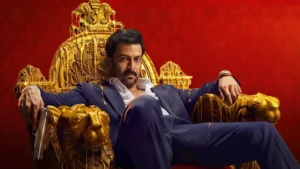
Varavu (2026): The hillside town gives the film energy despite weak payoffs


A single incident fractures a family, buries truths, and weaponizes silence across an entire community. Shaji Kailas, working from a non-linear script by A K Sajan, opens his film with a slow-burn tremor rather than a bang, and that choice defines everything that follows in Varavu.
Joju George plays a man who has been waiting to break
As “Poly” Polachan, Joju George carries the weight of years lost inside his posture. George does not announce the character’s pain; it sits in the quiet between his words, especially during the return to the hillside town after a long absence. That single moment of re-entry, face unreadable but body coiled, tells you everything about a man who has learned to survive by staying still.
The performance works because it refuses to signal heroism too early. George lets the mystery breathe around him.
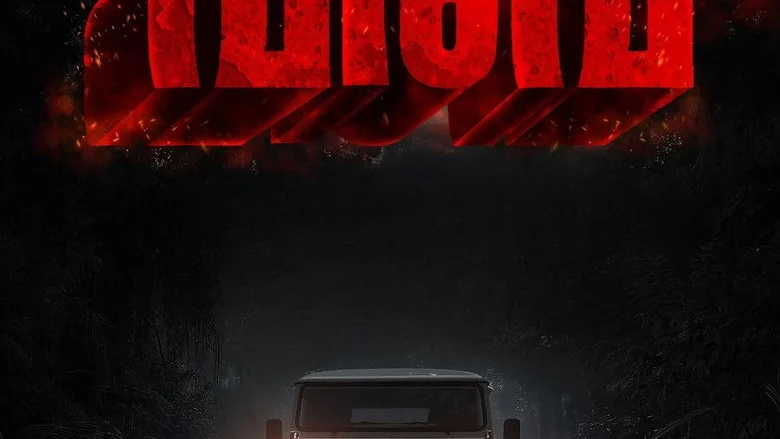
Direction and screenplay: A slow fuse in a hurry to burn out?
Shaji Kailas directs with a clear hand for atmosphere, letting the hillside location and the town’s buried secrets create the tension naturally. The film’s non-linear structure, past events resurfacing years later, gives the mystery a textured, layered quality that rewards patience. But the screenplay stumbles in its middle act, where the pacing loses its grip and repeats the same beats of “waiting for the past to strike.”
One specific flaw: the environmental dread that builds so effectively in act one dissipates into talky exposition before the protagonist’s final confrontation.
The genre-core: How silence becomes the real antagonist
Varavu treats silence as a narrative weapon, not just a mood. In a genre that usually relies on loud action beats and escalating stakes, Kailas and Sajan choose to let gaps in dialogue and withheld information do the heavy lifting. The initial incident, the one that fractures the family, is handled with restraint, denying the audience the catharsis of a clean explanation until much later.
This is an action thriller that distrusts action. When Polachan finally confronts the town’s power structures in the climax, the fight is less a physical brawl and more a reckoning with systems that have learned to speak through absence. The primary genre craft here is withholding, and it mostly works.
Where it falters: the mystery component requires the audience to hold onto details that sometimes blur into the scenery. The film’s commitment to opacity occasionally crosses into frustration, especially when key reveals depend on information buried in earlier scenes without clear connective tissue.
Murali Gopy’s Medayil Kochettan: A villain by shadow, not by volume
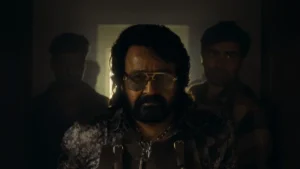
Murali Gopy plays Medayil Kochettan as a man whose power comes from not raising his voice. In every scene he shares with Joju George, Gopy positions himself away from the light, letting his stillness suggest authority rather than shouting it. The character exists as a system of control, he does not need to act; the town acts for him.
The performance is smart but underdrawn. Gopy gets a few strong moments of implied menace, but the screenplay could have given Kochettan one concrete scene of cruelty to sharpen his edges. As written, he remains a type more than a fully inhabited threat.
Arjun Ashokan and the supporting cast: Functional but not memorable
Arjun Ashokan’s Williams feels underwritten, existing mostly as a narrative function rather than a person with independent desires. Ashokan brings a certain lived-in quality to the role, but the script leaves him stranded in reactive territory. Baiju Santhosh and Baburaj appear in supporting roles that signal the film’s intent to build a town-wide ecosystem of influence, yet neither gets a scene that establishes their specific relationship to Polachan or Kochettan.
Vani Vishwanath and Saniya Iyyappan are present in the cast but the research does not specify their roles, which may indicate underwritten parts. Their casting suggests an attempt to add emotional texture to the male-driven power struggle, but the film does not invest in them enough for that intent to land.
Release delays and the audience angle: A quiet arrival
Varavu faced multiple release date changes, announced for May 1, then June 12, then finally July 16, which often signals post-production troubles or distribution recalibration. For a film built on controlled silence and slow mystery, the delayed release may have damaged its initial reception, as audience anticipation cools with each postponement. The UA16+ certificate suggests content with mature themes of power and systemic conflict, which aligns with the film’s brooding tone but may limit its reach to a wider, family-seeking audience.
Critic ratings and audience scores are unavailable given the film’s recent release date, but the word-of-mouth will likely depend on whether viewers embrace the film’s patience or dismiss its withholding nature as emptiness.
For those drawn to the craft of Malayalam thrillers, the growing library of Malayalam action reviews offers a useful benchmark to judge what Varavu does differently, and where it falls short of the standard.
Varavu is a film that respects its own mystery more than it respects your desire for clarity. If you are a viewer who values atmosphere over payoff and tension over resolution, this hillside drama will reward your patience. But if you need your action thrillers to deliver catharsis with a clean exit, you may find the silence more frustrating than haunting. Watch it in regular 2D, with the volume up and the lights low, the sound design matters here.
Shaji Kailas’s Varavu is a watch for genre purists who can tolerate impatience, but ultimately lands as a 2.5/5, an atmospheric mystery whose promise of reckoning outruns its delivery.
For a more complete collision of performance and genre craft, the uneven tensions in Ire review offer a contrasting approach to Malayalam thriller storytelling.
Joju George’s quiet ferocity here is best understood alongside the more experimental action ambitions of Dongamohan verdict.
Ankit Jaiswal is the Chief Author, covering Indian cinema and OTT releases with honest, no-filler criticism. An SEO strategist by background, he brings a research-driven approach to film writing, cutting through hype to tell you exactly what's worth your time.
Related Movies & Releases