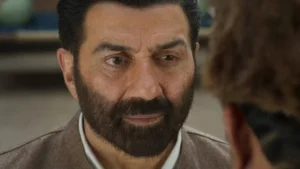
Jailer 2 (2026): Rajinikanth’s Return Is A Star Vehicle Running On Fumes

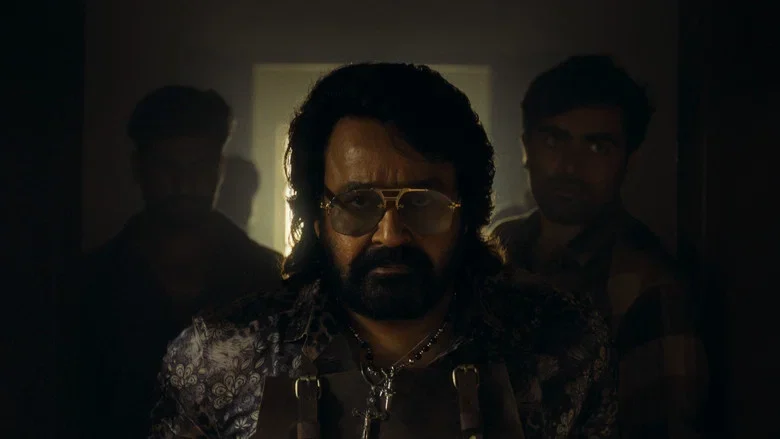
Nelson Dilipkumar opens his sequel not with a prison riot but with a kitchen. Tiger Muthuvel Pandian, retired and domesticated, hovers near a stove while his grandson Rithu chatters about something that does not matter.
The peace lasts roughly four minutes. Then the phone rings, and the film remembers it has a franchise to service.
A Retirement That Never Earns Its Silence
The first act wants us to believe Muthuvel has genuinely surrendered his authority. Rajinikanth plays these early scenes with a deliberate slackness, shoulders dropped, voice pitched half an octave lower than his iconic register, hands that keep reaching for objects he no longer needs to hold.
It is a smart physical choice. The problem is that Nelson does not trust it. Within twenty minutes, the camera is already circling him like a predator, and Anirudh’s score is already swelling under mundane domestic exchanges.
The film is terrified of its own quiet. Every moment of stillness gets interrupted by a cut to something louder, as if the director worried the audience might forget they paid for a Rajinikanth picture.
The Villain Problem Nobody Wants To Name
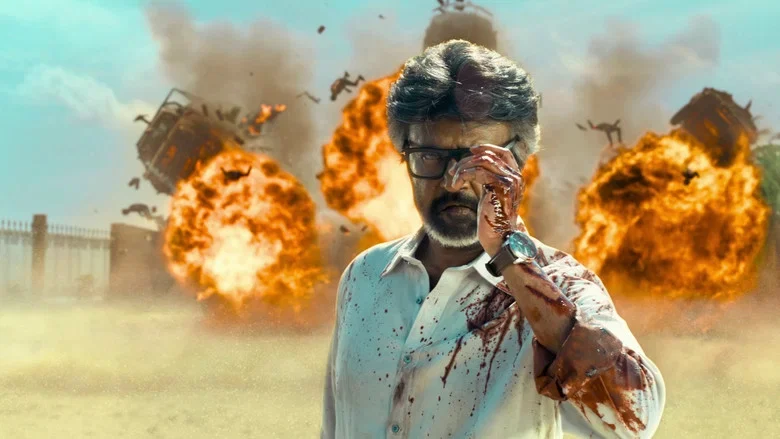
Here is the structural wound: Jailer 2 does not have a villain. It has a criminal organisation, a nebulous network of drug runners and idol smugglers who function less as characters and more as plot delivery mechanisms.
Compare this to the first film’s Vinayakan, whose physical menace was rooted in specific gestures, the way he tilted his head before delivering a threat, the unnerving calm of his voice. Here, the antagonists are interchangeable faces in dark rooms, delivering exposition about shipments and territory.
Where Toxic at least attempted to build its antagonist around a dual-role performance, Nelson’s sequel simply assumes that “criminal network” is sufficient dramatic opposition. It is not.

Ramya Krishnan Deserves More Than Window Dressing
Vijaya Pandian exists in this film primarily to be worried. Ramya Krishnan, an actress capable of steel when given the space, spends most of her screen time looking at doorways with furrowed concern.
There is one moment, a brief exchange where her hand finds Muthuvel’s arm before he leaves, that suggests the film she could have been in. It passes in seconds.
The supporting ensemble suffers similar fates. S. J. Suryah, who brought such specific comic energy to Sardar 2, appears here in a role so underdefined that his presence registers as a casting announcement rather than a performance.
When The Interval Twist Becomes The Only Trick
Much has been made of the mid-film revelation. Without spoiling its content, I will say this: it is a good twist executed in the wrong film.
It lands with genuine force precisely because the preceding ninety minutes have been so dramatically inert. The audience around me erupted, not because the moment was earned, but because it was the first time the film had genuinely surprised them.
Nelson stages it with clean efficiency: a hard cut, a shift in aspect ratio, Anirudh dropping the score entirely for three seconds of silence before the percussion hits. It is the most directorially confident sequence in the picture.
But a twist is not a structure. Once the revelation settles, the film must continue, and it continues into the same shapeless action beats that preceded it.
Rajinikanth’s Body Knows What The Script Does Not
The star remains the reason to watch. At seventy-five, he moves with a calculated economy, no wasted gestures, no attempt to pretend he is the performer who threw punches in Baashha.
His action sequences here are built around stillness followed by sudden violence. He waits, eyes fixed on his opponent, and then the edit delivers the impact. It is a choreography of restraint, and it suits him.
The problem is that the film does not know what to do with a restrained Rajinikanth. It keeps asking him to be larger, louder, more mythic, when his most compelling moments are the quiet ones, a grandfather teaching his grandson to fold a shirt, a husband watching his wife sleep.
The climax asks him to deliver a monologue about legacy and family. He does it with conviction. But conviction cannot disguise a speech that says nothing we have not already heard.
A Franchise Running On Recognition, Not Reinvention
Nelson Dilipkumar’s first Jailer worked because it understood something essential: Rajinikanth’s late-career appeal lies in watching an old lion pretend to be tame. The sequel understands this too, but understanding is not the same as executing.
The screenplay moves through its paces with mechanical precision, threat, investigation, confrontation, twist, bigger confrontation, but never finds a reason for any of it to matter. The family stakes are asserted rather than felt.
Where the first film’s violence carried a grim satisfaction, this one’s feels obligatory. The bodies pile up because that is what these films do, not because the story demands it.
The expanded ensemble suggests a franchise attempting to build a universe. But universes require characters worth revisiting, and this film’s new additions remain ciphers.
Sun Pictures And The Economics Of Star Power
Sun Pictures has bet heavily on this release, positioning it for IMAX screens and international markets. The pre-release trade projections, ₹125-140 crore worldwide on opening day, reflect the star’s enduring commercial gravity.
But opening numbers and franchise sustainability are different questions. The first Jailer worked because it felt like a genuine event, a director and star finding unexpected chemistry.
This sequel feels like a product. The crossover appearances, the expanded cast, the larger-scale action, these are the moves of a franchise trying to extend its lifecycle through accumulation rather than evolution.
For Rajinikanth, the calculus is simpler. He remains the only Tamil star who can open a film at this scale on name alone. But even that leverage has limits, and a third installment built on this template would test them.
The broader landscape of contemporary Tamil action has moved toward tighter, more character-driven storytelling. Jailer 2 feels like it is fighting the current rather than riding it.
The Verdict That The Film Resists
There is a moment late in the third act where Muthuvel stands alone in a corridor, breathing heavily after a fight. The camera holds on him for an uncomfortable beat. He looks tired, genuinely, unglamorously tired.
For a second, the film threatens to become about something real: the cost of violence on a man who thought he had escaped it. Then the moment passes, the score surges, and we are back to business as usual.
That is Jailer 2 in miniature, a film that glimpses its own potential and then looks away. It delivers the expected pleasures with professional competence, but it never surprises, never challenges, never earns the emotion it keeps demanding.
Rajinikanth deserves a better vehicle for this phase of his career. So does his audience. The star may be eternal, but even eternity needs better scripts.

Ankit Jaiswal is the Chief Author, covering Indian cinema and OTT releases with honest, no-filler criticism. An SEO strategist by background, he brings a research-driven approach to film writing, cutting through hype to tell you exactly what's worth your time.
Related Movies & Releases