Batwara 1947 (2026): Sunny Deol & Shabana Azmi Anchor a House Divided

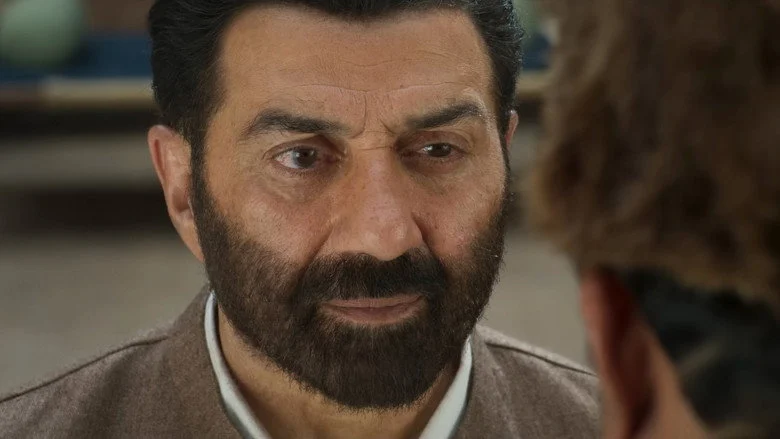
The first confrontation inside the Lahore haveli lands with the weight of a slammed door, Sikander Mirza’s refugee family has been allotted a home, but Mai refuses to leave it. In that single standoff, Rajkumar Santoshi frames Partition not as a geopolitical event but as a moral argument played out in domestic space.
Sunny Deol’s Silence Does the Heavy Lifting
Deol, as Sikander Mirza, is positioned less as an action hero and more as a man crushed between duty and decency. Promotional material shows him absorbing pressure rather than exploding, a notable shift for an actor whose career was built on detonation.
The trailer’s emotional exchanges suggest he’s playing resistance through restraint. Whether that restraint holds across 145 minutes remains the film’s biggest question.
Shabana Azmi’s Mai Is the Film’s Moral Center
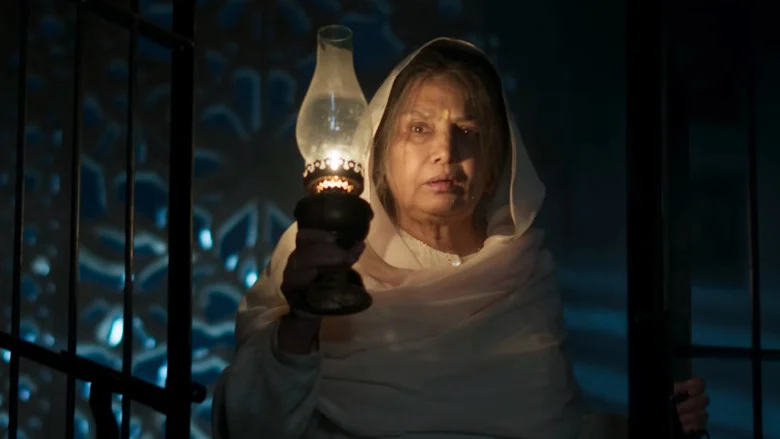
Azmi’s Mai is the counterweight to every argument the refugee family makes. Her refusal to vacate the house isn’t stubbornness, it’s memory refusing to be evicted. The casting signals that the film understands its own political weight.
Her scenes with Deol carry the premise’s entire ethical tension. If the film works, it works because these two actors make property disputes feel like existential ones.
Rajkumar Santoshi Directs the Domestic as Political
Santoshi, adapting Asghar Wajahat’s play, keeps the battlefield off-screen and puts the war inside four walls. The house-allotment confrontation is the film’s engine, and the trailer wisely centers it as the core dramatic device. This is a director choosing interiority over spectacle.
The flaw is structural: the play’s single-location intensity may not stretch naturally into a 145-minute period drama. Communal tension outside the home is teased in the trailer, but whether Santoshi balances that external pressure with the internal standoff is unproven.
The screenplay follows a linear path toward a moral resolution, human connection over property ownership, which risks sentimentality if the craft doesn’t earn it.
Preity Zinta and Ali Fazal Fill the Ensemble’s Edges
Zinta’s Hamida Mirza exists inside the family unit, and her casting brings warmth to a frame dominated by male rigidity. Her return to screen after years away signals that the role carries dramatic weight beyond a typical spouse part. The trailer suggests she mediates between Sikander’s duty and Mai’s grief.
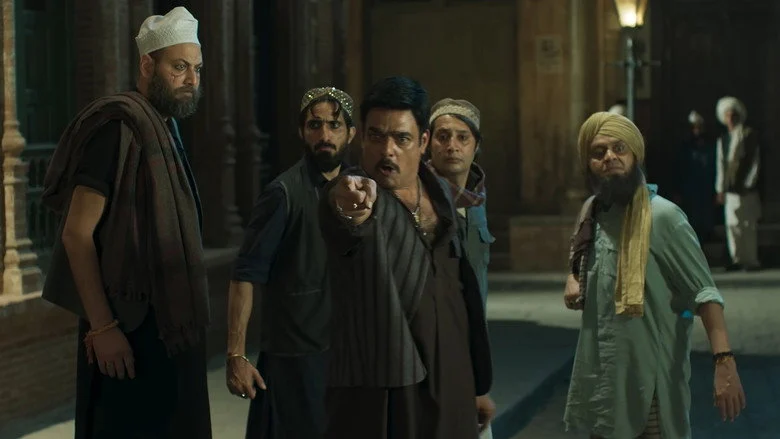
Ali Fazal’s dual role as Habeeb and Nasir Kazmi adds a literary texture to the ensemble, hinting at identity fragmentation that mirrors the Partition theme. Abhimanyu Singh’s Yaqoob Pehalwan is listed as the antagonist, but the sources don’t confirm whether he’s a conventional villain or a symptom of communal madness.
The Censor Clearance and the Political Tightrope
The film reportedly passed the censor board without cuts, a notable fact for a project about Partition. That clearance suggests Santoshi and producer Aamir Khan have framed the story as human tragedy rather than political accusation.
The ₹150 crore budget, as reported by Wikipedia, signals a serious period-production scale. The cast pairing alone has driven pre-release interest, with A.R. Rahman’s score and Javed Akhtar’s lyrics adding prestige weight.
For a film this loaded with historical memory, the trailer’s line, “In times of hatred and fear, he chose courage”, sets a clear emotional target. Whether the execution matches the ambition is the gamble.
Browse more Hindi Action reviews for films that tackle history through personal conflict.
Batwara 1947 arrives on 14 August 2026, and the timing is deliberate, a Partition story opening on Partition’s eve. For audiences exhausted by spectacle-driven period pieces, this is a welcome counter-programming choice. See it for Azmi’s quiet authority and Deol’s uncharacteristic restraint; skip it if you need your history with more fireworks.
The film earns a cautious 3 out of 5 for premise and casting, pending proof that Santoshi can sustain stage intimacy at cinematic scale.
For another take on moral choices under pressure, see how Picture review handles ambition and consequence.
If you prefer stories where setting itself becomes a character, Photographer verdict frames danger through its environment.

Ankit Jaiswal is the Chief Author, covering Indian cinema and OTT releases with honest, no-filler criticism. An SEO strategist by background, he brings a research-driven approach to film writing, cutting through hype to tell you exactly what's worth your time.
Related Movies & Releases